 ChipApex | Global Electronic Components Supplier
SEARCH
Search Product
Search Post
— IC芯片 | 连接器 | 传感器 | 被动器件 —
Search productSearch post
— IC芯片 | 连接器 | 传感器 | 被动器件 —
Consult the customer manager about the wholesale price.
consultation hotline:86-132-6715-2157
email:[email protected]
Contact the product manager for consultation. One-stop consultation is available.
Do you want a lower wholesale price? Please send us your inquiry and we will reply immediately.
The UJA1078ATW/3/2Z is a high-speed CAN and dual LIN core System Basis Chip (SBC) from NXP Semiconductors, designed for automotive electronic control units. It integrates a high-speed CAN transceiver compliant with ISO 11898-2 and ISO 11898-5 standards, alongside two LIN 2.1-compatible transceivers. The device features an advanced independent watchdog timer with window and timeout modes, a serial peripheral interface (SPI), and a 250 mA voltage regulator for microcontroller power supply. Packaged in a compact HTSSOP32 format, it supports low-power concepts and controlled system startup.
Verify the specific ordering suffix matches the required voltage regulator output and packaging configuration. Confirm that the component meets RoHS and halogen-free requirements for your assembly process. Ensure the HTSSOP32 package dimensions align with your PCB footprint design. Check for any specific environmental or reliability certifications required by your automotive standard compliance protocols before finalizing procurement orders.
Select this SBC when a unified solution for CAN and dual LIN communication is needed to reduce board space and component count. It is suitable for designs requiring a dedicated voltage regulator for the microcontroller with up to 250 mA current capability. Consider this part if enhanced EMC performance and robust ESD protection are critical for the application environment. Ensure the microcontroller interface supports SPI for configuration and status monitoring.
This component belongs to the UJA series of System Basis Chips, which integrate essential functions like transceivers, regulators, and watchdogs into a single package. These chips are designed to simplify the design of electronic control units by replacing multiple discrete components. The UJA1078 variant specifically targets applications needing both high-speed CAN and dual LIN connectivity for comprehensive vehicle networking.
Direct substitutes may include other variants within the UJA1078 family with different voltage regulator outputs or packaging options. Verify pin-to-pin compatibility and electrical specifications before swapping. Consult official NXP documentation for approved alternative part numbers that maintain functional equivalence.
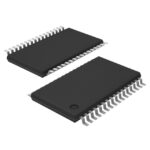 UJA1078ATW/3/2Z
The activity of extra discounts on wholesale prices is in full swing…
Please fill in your contact information and we will send you the latest wholesale price list.





