 ChipApex | Global Electronic Components Supplier
SEARCH
Search Product
Search Post
— IC芯片 | 连接器 | 传感器 | 被动器件 —
Search productSearch post
— IC芯片 | 连接器 | 传感器 | 被动器件 —
Consult the customer manager about the wholesale price.
consultation hotline:86-132-6715-2157
email:[email protected]
Contact the product manager for consultation. One-stop consultation is available.
Do you want a lower wholesale price? Please send us your inquiry and we will reply immediately.
The UJA1132HW/FD/5V/0Y is a specialized power management IC designed as a system basis chip for automotive applications. It integrates a buck/boost converter providing 5 V at 500 mA and a separate 5 V regulator delivering 100 mA. The device features a high-speed CAN interface supporting data rates up to 1 Mbps and dual LIN interfaces. It includes up to eight high-voltage I/Os (HVIO) and supports optional CAN partial networking functionality, all housed in a 48-lead HTQFP package.
Verify the specific suffix FD/5V/0Y against the manufacturer's current datasheet to confirm pinout compatibility and packaging details. Ensure that the required thermal performance matches the HTQFP-48 package constraints for your specific PCB layout. Cross-reference the ordering part number with official NXP documentation to avoid confusion with similar variants lacking the dual LIN or specific voltage regulator configurations.
Select this component when a single-chip solution is needed to combine power management with both high-speed CAN and dual LIN communications. It is suitable for designs requiring independent 5 V power rails with different current capacities. Consider the HVIO count if direct interfacing with high-voltage peripherals is necessary without additional level shifters. Evaluate the thermal dissipation requirements of the buck/boost converter under maximum load conditions.
This part belongs to NXP's UJA113x family of system basis chips, which are designed to simplify automotive electronic design by integrating essential power and communication functions. These chips typically replace multiple discrete components, reducing board space and complexity. The UJA1132 variant specifically targets applications requiring robust CAN connectivity alongside flexible LIN support and versatile power delivery options.
Check for UJA1132AHW/5F4/0Y or UJA1132HW/5V0 as potential functional equivalents within the same product family. Verify that any substitute maintains the same package type and pinout configuration to ensure mechanical compatibility. Confirm that the alternative part supports the required CAN speed and LIN interface count before finalizing the swap.
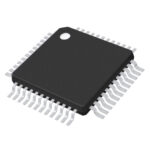 UJA1132HW/FD/5V/0Y
The activity of extra discounts on wholesale prices is in full swing…
Please fill in your contact information and we will send you the latest wholesale price list.





