 ChipApex | Global Electronic Components Supplier
SEARCH
Search Product
Search Post
— IC芯片 | 连接器 | 传感器 | 被动器件 —
Search productSearch post
— IC芯片 | 连接器 | 传感器 | 被动器件 —
Consult the customer manager about the wholesale price.
consultation hotline:86-132-6715-2157
email:[email protected]
Contact the product manager for consultation. One-stop consultation is available.
Do you want a lower wholesale price? Please send us your inquiry and we will reply immediately.
The ULQ2003AD is a high-voltage, high-current Darlington transistor array manufactured by Texas Instruments. It integrates seven NPN Darlington pairs within a single package, providing a total of seven independent channels. Each channel supports a maximum continuous collector current of 500 mA and can withstand peak currents up to 600 mA. The device features a maximum collector-emitter voltage (Vceo) of 50 V and an integrated common cathode clamp diode for inductive load suppression. It operates within a temperature range of -40°C to +85°C and is housed in a 16-pin SOIC-Narrow surface-mount package.
Verify the specific manufacturer part number against official documentation to ensure compatibility with design requirements. Confirm that the component meets necessary environmental standards such as RoHS compliance before integration into final products. Cross-reference datasheet specifications for electrical limits to prevent operational failures.
Select this component when driving moderate to high-current loads requiring high voltage tolerance. The integrated clamp diodes make it suitable for inductive loads without external protection components. Ensure the application logic levels are compatible with TTL, CMOS, PMOS, or DTL inputs. Consider the SOIC-16 package constraints for thermal management and physical space availability on the circuit board.
This device belongs to the ULQ2003A series of Darlington arrays. It shares functional similarities with other members like the ULN2003AN but utilizes a surface-mount SOIC-16 package instead of through-hole PDIP. The ULQ variant typically denotes automotive-grade qualification options in certain packaging configurations, offering extended temperature ranges compared to standard commercial versions.
The ULQ2003ADR serves as a tape-and-reel alternative to the tube-packaged ULQ2003AD. Both share identical electrical characteristics and pinouts. Verify package dimensions and lead finish specifications to ensure mechanical compatibility during substitution.
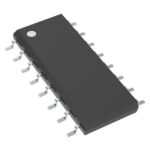 ULQ2003AD
The activity of extra discounts on wholesale prices is in full swing…
Please fill in your contact information and we will send you the latest wholesale price list.





