ChipApex | Global Electronic Components Supplier
SEARCH
Search Product
Search Post
— IC芯片 | 连接器 | 传感器 | 被动器件 —
Search productSearch post
— IC芯片 | 连接器 | 传感器 | 被动器件 —
Consult the customer manager about the wholesale price.
consultation hotline:86-132-6715-2157
email:[email protected]
Contact the product manager for consultation. One-stop consultation is available.
Do you want a lower wholesale price? Please send us your inquiry and we will reply immediately.
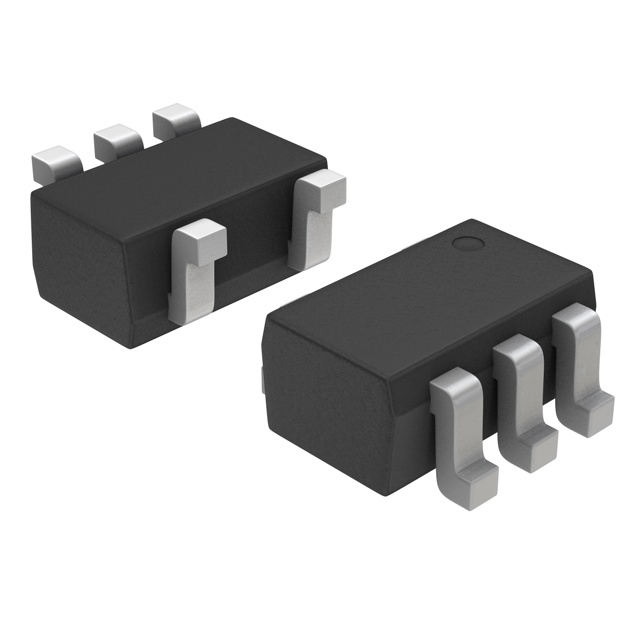
The UMC3NT1 is a dual Bias Resistor Transistor (BRT) from onsemi, integrating one PNP and one NPN silicon transistor with monolithic bias resistor networks in an SC-88A/SOT-353 package. It features a collector-emitter breakdown voltage of 50 Vdc and a maximum collector current of 100 mAdc for both devices. The PNP transistor includes a series base resistor (R1) of 7.0 kΩ and a base-emitter resistor (R2) of 10 kΩ, while the NPN transistor utilizes R1 values of 33 kΩ and R2 of 47 kΩ. Designed for low-power surface mount applications, it simplifies circuit design by replacing discrete components.
Verify the specific ordering suffix when purchasing. The standard UMC3NT1 designation refers to the tin-plated lead finish version. For lead-free compliance, confirm if the 'G' suffix (UMC3NT1G) is required. Ensure the tape and reel quantity matches the project needs, as the standard shipping unit is 3000 units per reel. Check the device marking code 'U3' on received components to verify authenticity.
Select the UMC3NT1 over discrete transistor-resistor combinations when minimizing footprint and assembly steps is critical. Compare the internal resistor values against the target application's bias requirements to ensure proper drive levels. Verify that the 50 Vdc voltage rating and 100 mA current limit meet the system's electrical stress conditions. Consider thermal dissipation limits if operating near maximum ratings.
This component belongs to the UMC2NT1/UMC3NT1/UMC5NT1 family of dual common base-collector bias resistor transistors. These devices are categorized as preferred products by onsemi, indicating they are recommended choices for future use and offer the best overall value within this product line. They share the same SOT-353 package and general functional architecture.
Direct pin-compatible replacements include the UMC3NT1G (lead-free version). Other variants in the series like UMC2NT1 or UMC5NT1 have different internal resistor ratios and may not be electrically equivalent without circuit modification.
 UMC3NT1
The activity of extra discounts on wholesale prices is in full swing…
Please fill in your contact information and we will send you the latest wholesale price list.