 ChipApex | Global Electronic Components Supplier
SEARCH
Search Product
Search Post
— IC芯片 | 连接器 | 传感器 | 被动器件 —
Search productSearch post
— IC芯片 | 连接器 | 传感器 | 被动器件 —
Consult the customer manager about the wholesale price.
consultation hotline:86-132-6715-2157
email:[email protected]
Contact the product manager for consultation. One-stop consultation is available.
Do you want a lower wholesale price? Please send us your inquiry and we will reply immediately.
The UMH1N-TP is a surface-mount Schottky barrier rectifier manufactured by Micro Commercial Components. It features a single diode configuration within an SOD-323 package, designed for high-efficiency power applications. The device is characterized by a maximum repetitive peak reverse voltage of 100 V and a continuous forward current rating of 1 A. Key electrical parameters include a low forward voltage drop of approximately 0.5 V at rated current and a very low reverse leakage current of 5 µA at maximum rated voltage. The component utilizes a plastic molding compound rated UL Flammability Classification 94V-0 and is certified as RoHS compliant, making it suitable for space-constrained PCB designs requiring reliable rectification.
Verify the specific tape-and-reel quantity against the distributor's listing, as packaging options may vary between cut tape and full reels. Confirm the presence of the TP marking on the component body to distinguish it from standard variants. Ensure the storage environment remains within specified temperature limits to maintain lead integrity before soldering.
Select this component when a compact SOD-323 footprint is required for 1 A rectification tasks. Compare the forward voltage specifications against alternative manufacturers to ensure compatibility with system efficiency targets. Verify that the 100 V reverse voltage rating provides adequate margin for the specific circuit's peak inverse voltage conditions.
This part belongs to MCC's UMH series of surface-mount Schottky rectifiers. The series offers various voltage ratings and current capacities in small outline packages. The UMH1N-TP specifically addresses the need for high-current density in minimal board space, serving as a direct replacement for larger through-hole diodes in modern consumer electronics and industrial control boards.
Direct substitutes include the MBRS1100T3G from ON Semiconductor and the SS1A from Diodes Inc., provided the pinout and thermal characteristics match the original design constraints.
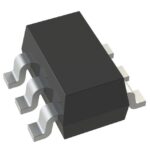 UMH1N-TP
The activity of extra discounts on wholesale prices is in full swing…
Please fill in your contact information and we will send you the latest wholesale price list.




