 ChipApex | Global Electronic Components Supplier
SEARCH
Search Product
Search Post
— IC芯片 | 连接器 | 传感器 | 被动器件 —
Search productSearch post
— IC芯片 | 连接器 | 传感器 | 被动器件 —
Consult the customer manager about the wholesale price.
consultation hotline:86-132-6715-2157
email:[email protected]
Contact the product manager for consultation. One-stop consultation is available.
Do you want a lower wholesale price? Please send us your inquiry and we will reply immediately.
The UMH9NHE3-TP is a dual NPN pre-biased transistor array manufactured by Micro Commercial Components. It integrates two NPN transistors with internal base resistors in a compact SOT-363 surface-mount package. Key electrical specifications include a maximum collector-emitter voltage (Vceo) of 50V and a continuous collector current (Ic) of 100mA. The device features a typical base resistor (R1) value of 10 kΩ, a minimum DC current gain (hFE) of 68 at 5mA/5V, and a transition frequency (fT) of 250MHz. It operates within a temperature range of -55°C to +150°C with a power dissipation of 150mW.
Verify the specific suffix HE3 indicates Halogen-free and RoHS compliance status against the manufacturer's latest documentation. Confirm that the AEC-Q101 qualification applies to the specific batch or lot codes intended for automotive use. Ensure the ordering quantity matches the standard reel size of 3,000 units if tape-and-reel packaging is required for automated assembly processes.
Select this component when a dual NPN digital transistor with a 10kΩ base resistor is required. The 50V rating and 100mA current capacity suit low-power switching tasks. Compare hFE minimums and saturation voltages against alternative series like UMD12NHE3-TP if higher gain or different resistance ratios are needed. Verify thermal management requirements given the 150mW power dissipation limit in the small SOT-363 footprint.
This part belongs to the UMH9N series of pre-biased transistors from Micro Commercial Components. It shares the same physical package and general electrical characteristics as the non-qualified UMH9N-TP variant but includes additional automotive-grade testing and certification. The HE3 suffix typically denotes environmental compliance features such as halogen-free materials, distinguishing it from standard commercial grade parts in the same family.
The UMH9N-TP is a direct functional substitute lacking automotive qualification. For single-transistor replacements, consider DTC143T variants. Cross-manufacturer equivalents should be verified for pin compatibility and electrical limits.
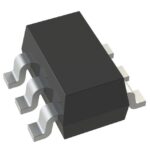 UMH9NHE3-TP
The activity of extra discounts on wholesale prices is in full swing…
Please fill in your contact information and we will send you the latest wholesale price list.




