ChipApex | Global Electronic Components Supplier
SEARCH
Search Product
Search Post
— IC芯片 | 连接器 | 传感器 | 被动器件 —
Search productSearch post
— IC芯片 | 连接器 | 传感器 | 被动器件 —
Consult the customer manager about the wholesale price.
consultation hotline:86-132-6715-2157
email:[email protected]
Contact the product manager for consultation. One-stop consultation is available.
Do you want a lower wholesale price? Please send us your inquiry and we will reply immediately.
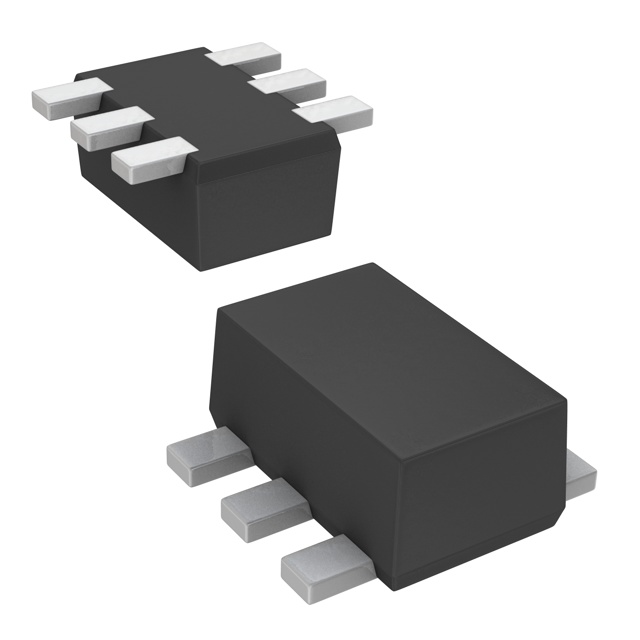
The Panasonic UP0431300L is a composite transistor array featuring one NPN and one PNP pre-biased element within an SSMini6-F1 package. It operates with a maximum collector-emitter voltage of 50V and a continuous collector current of 100mA per transistor. The device includes built-in resistors, specifically an input resistance (R1) of 47kΩ with a ±30% tolerance. Transition frequencies are rated at 150MHz for the NPN section and 80MHz for the PNP section. Total power dissipation is limited to 125mW, with a junction temperature range up to 125°C.
Verify the specific lifecycle status directly with the manufacturer or authorized distributors before finalizing designs. Confirm that the SSMini6-F1 package dimensions align with the target PCB layout constraints. Ensure the 125mW total power dissipation rating accommodates the thermal environment of the intended application without exceeding the maximum junction temperature limits.
Select this component when space-saving integration of complementary NPN and PNP switching elements is required. Verify that the 47kΩ internal base resistor value matches the drive requirements of the control logic. Consider the transition frequency specifications to ensure adequate performance for the target switching speeds in the digital circuit design.
This part belongs to the UP0431 series of composite transistors manufactured by Panasonic Industry. These devices are designed as direct replacements for discrete transistor combinations, offering a standardized solution for dual-transistor configurations in consumer electronics and general industrial equipment.
The datasheet identifies the UNR2213 and UNR2113 as the basic discrete parts comprising this unit. Designers replacing discrete components with this integrated unit must account for the fixed 47kΩ internal resistor values and the shared thermal dissipation constraints of the combined package.
The input resistance (R1) is nominally 47kΩ with a tolerance of ±30%.
The maximum collector current is 100mA for both the NPN and PNP sections.
No, the documentation specifies it is intended for standard applications such as office and communications equipment, not for automotive grade use.
 UP0431300L
The activity of extra discounts on wholesale prices is in full swing…
Please fill in your contact information and we will send you the latest wholesale price list.