 ChipApex | Global Electronic Components Supplier
SEARCH
Search Product
Search Post
— IC芯片 | 连接器 | 传感器 | 被动器件 —
Search productSearch post
— IC芯片 | 连接器 | 传感器 | 被动器件 —
Consult the customer manager about the wholesale price.
consultation hotline:86-132-6715-2157
email:[email protected]
Contact the product manager for consultation. One-stop consultation is available.
Do you want a lower wholesale price? Please send us your inquiry and we will reply immediately.
The UW-05-515-P(F) is a piezoelectric chime alarm manufactured by Floyd Bell Inc. It features an internally driven indicator circuit and accepts DC input within a voltage range of 5 to 25 volts. The device operates at a frequency of 2.9 kHz with a sound pressure level of 70 dB measured at 5 volts and 61 cm distance. Power consumption ranges from 5 to 25 mA depending on the applied voltage. Designed for panel mounting, it utilizes wire leads for connection and has a top port location. The unit measures 1.410 inches in diameter and up to 1.480 inches in height. It is rated for operation between -20°C and 65°C and holds UL and UR approval agencies.
Verify the specific suffix configuration against the manufacturer's current datasheet to ensure compatibility with required mounting dimensions and lead lengths. Confirm that the internal driver circuit matches the intended logic interface without external components. Check for any recent regulatory updates regarding UL or UR certifications relevant to the target deployment region before finalizing procurement orders.
Select this component when a self-contained audible signal is required for panel integration. The wide voltage tolerance allows flexibility in power supply design across various industrial standards. Ensure the acoustic output meets environmental noise requirements, as the SPL is specified at a fixed distance. Consider the physical dimensions for enclosure cutout planning and verify thermal limits against the expected ambient operating conditions.
This part belongs to the AudioLarm II series of piezoelectric chimes. The series provides reliable audible notification solutions for electronic equipment. The specific model integrates the driver electronics directly into the transducer assembly, simplifying circuit board layout and reducing component count compared to externally driven alternatives.
Cross-reference with other models in the AudioLarm II series for dimensional compatibility. Verify electrical parameters such as frequency and voltage range match the existing design constraints before substituting.
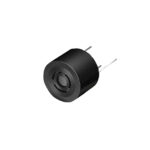 UW-05-515-P(F)
The activity of extra discounts on wholesale prices is in full swing…
Please fill in your contact information and we will send you the latest wholesale price list.





