 ChipApex | Global Electronic Components Supplier
SEARCH
Search Product
Search Post
— IC芯片 | 连接器 | 传感器 | 被动器件 —
Search productSearch post
— IC芯片 | 连接器 | 传感器 | 被动器件 —
Consult the customer manager about the wholesale price.
consultation hotline:86-132-6715-2157
email:[email protected]
Contact the product manager for consultation. One-stop consultation is available.
Do you want a lower wholesale price? Please send us your inquiry and we will reply immediately.
The Floyd Bell UW-09-515-Q(S) is a piezoelectric panel mount chime alarm belonging to the Audiolarm II series. It features an internally driven indicator circuit and accepts DC input within a voltage range of 5 to 25 volts. The device operates at a frequency of 2.9 kHz with a sound pressure level of 70 dB measured at 5V and 61 cm. Power consumption ranges from 5 to 25 mA depending on the applied voltage. It provides IP68 protection against dust and water ingress, ensuring durability in harsh environments. The unit utilizes wire leads for termination and is designed for top port mounting.
Verify that the specific suffix (S) matches the required lead wire configuration and insulation type for your assembly. Confirm the operating voltage aligns with your system's DC supply to ensure correct current draw and acoustic output levels. Check for UL or UR certification requirements if the end application mandates specific safety agency approvals. Ensure physical dimensions fit the designated panel cutout space.
Select this component when high environmental resistance is required due to its IP68 rating. The wide voltage tolerance allows use in systems with varying DC potentials without external regulation. Consider the 70 dB SPL for applications requiring moderate volume over longer distances. Verify that the 2.9 kHz tone frequency meets the specific auditory alert standards of the target industry.
This model is part of the Audiolarm II family, which focuses on robust, panel-mount acoustic signaling solutions. The series typically includes various voltage and tone configurations to suit different industrial and commercial needs. Floyd Bell designs these units for long-term reliability in demanding operational settings.
Cross-reference with other models in the Audiolarm II series for similar voltage and frequency specifications. Ensure any substitute maintains the IP68 rating and panel mount form factor. Verify that the replacement part supports the same internally driven interface to avoid circuit redesign.
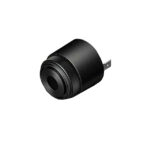 UW-09-515-Q(S)
The activity of extra discounts on wholesale prices is in full swing…
Please fill in your contact information and we will send you the latest wholesale price list.





