 ChipApex | Global Electronic Components Supplier
SEARCH
Search Product
Search Post
— IC芯片 | 连接器 | 传感器 | 被动器件 —
Search productSearch post
— IC芯片 | 连接器 | 传感器 | 被动器件 —
Consult the customer manager about the wholesale price.
consultation hotline:86-132-6715-2157
email:[email protected]
Contact the product manager for consultation. One-stop consultation is available.
Do you want a lower wholesale price? Please send us your inquiry and we will reply immediately.
The V585ME40-LF is a surface-mount voltage-controlled oscillator manufactured by Z-Communications, Inc. It operates within a frequency range of 800 MHz to 1650 MHz, with a center frequency of 1225 MHz. The device requires a nominal supply voltage of 5 V and delivers an output power of approximately 3.5 dBm. Tuning sensitivity is specified at 50 MHz/V, controlled via a tuning voltage input. This component is designed for high-performance applications requiring stable frequency generation in wireless systems.
Verify the specific datasheet version for the V585ME40-LF to confirm exact electrical tolerances and pinout configurations before integration. Ensure that the supply voltage remains within the specified 5 V nominal limit to maintain optimal performance and prevent damage. Cross-reference the manufacturer's official documentation for any updates regarding RoHS compliance or lead-free status associated with the LF suffix.
Select the V585ME40-LF when a wide tuning range centered around 1225 MHz is required for surface-mount designs. Consider its 50 MHz/V sensitivity for applications needing rapid frequency adjustments. Evaluate the 3.5 dBm output power against system loss budgets. Compare against other V-series models if different frequency bands or power levels are necessary for the specific wireless application.
This component belongs to the V585 series of voltage-controlled oscillators produced by Z-Communications, Inc., a leader in VCO and PLL technology. The series includes various models such as the V585ME08-LF and V585ME44-LF, each tailored for specific frequency ranges. The V585ME40-LF specifically targets the 800-1650 MHz band, offering a balance of wide tuning capability and moderate output power for commercial wireless markets.
The V585ME08-LF and V585ME44-LF are part of the same family but operate at different frequencies. Direct substitution requires verifying that the target frequency range matches the application requirements. No direct cross-manufacturer substitutes are documented in the provided data.
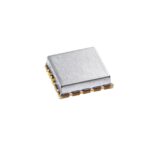 V585ME40-LF
The activity of extra discounts on wholesale prices is in full swing…
Please fill in your contact information and we will send you the latest wholesale price list.




