 ChipApex | Global Electronic Components Supplier
SEARCH
Search Product
Search Post
— IC芯片 | 连接器 | 传感器 | 被动器件 —
Search productSearch post
— IC芯片 | 连接器 | 传感器 | 被动器件 —
Consult the customer manager about the wholesale price.
consultation hotline:86-132-6715-2157
email:[email protected]
Contact the product manager for consultation. One-stop consultation is available.
Do you want a lower wholesale price? Please send us your inquiry and we will reply immediately.
The VIPER115XSTR is an energy-saving offline high voltage converter from the VIPerPlus family, integrating an 800 V avalanche-rugged power MOSFET with a PWM current mode controller. It supports flyback, buck, and buck-boost topologies with a switching frequency of 30 kHz ± 7%. The device operates on a supply voltage range of 4.5 V to 30 V, featuring integrated HV startup, sense-FET, and error amplifier. Key electrical parameters include a maximum drain current limit of 590 mA, a maximum duty cycle of 80%, and a junction temperature range of -40°C to +125°C. It is housed in a 10-pin SSOP package.
Verify the specific suffix 'XSTR' indicates the reel packaging format when ordering. Confirm that the 30 kHz switching frequency variant aligns with your EMI requirements. Ensure the 10-pin SSOP footprint matches your PCB design. Cross-reference the manufacturer part number with distributor listings to confirm availability and authenticity before finalizing procurement.
Select this component for applications requiring low no-load power consumption and wide input voltage ranges. The integrated high-voltage startup reduces external component count compared to alternatives requiring separate bias supplies. Consider the 30 kHz frequency for cost-sensitive designs where lower switching losses are prioritized over miniaturization. Verify that the 590 mA current limit suits the target output power requirements.
This part belongs to the VIPerPlus series, designed for high-reliability offline power supplies. It combines high-voltage CMOS technology with a rugged power MOSFET. The series targets universal AC input adapters and auxiliary power supplies. The VIPER115 variant specifically offers a higher current limit than the 30 kHz base models, supporting slightly higher power densities within the same package constraints.
The VIPER115LSTR (60 kHz) and VIPER115HSTR (120 kHz) are direct functional substitutes within the same package, differing only in switching frequency. Other VIPerPlus variants may require topology adjustments due to different current limits or frequencies.
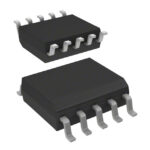 VIPER115XSTR
The activity of extra discounts on wholesale prices is in full swing…
Please fill in your contact information and we will send you the latest wholesale price list.





