 ChipApex | Global Electronic Components Supplier
SEARCH
Search Product
Search Post
— IC芯片 | 连接器 | 传感器 | 被动器件 —
Search productSearch post
— IC芯片 | 连接器 | 传感器 | 被动器件 —
Consult the customer manager about the wholesale price.
consultation hotline:86-132-6715-2157
email:[email protected]
Contact the product manager for consultation. One-stop consultation is available.
Do you want a lower wholesale price? Please send us your inquiry and we will reply immediately.
The VIPER17LD is an offline switch from the VIPerPlus series, designed for flyback topology applications. It integrates an 800V avalanche-rugged power MOSFET with a PWM current mode controller. Key electrical parameters include a switching frequency of 60kHz, a maximum duty cycle of 80%, and a supply voltage range of 8.5V to 23.5V. The device supports up to 9W output power and features internal protections including current limit, thermal shutdown, and overvoltage protection. It operates within a junction temperature range of -40°C to +150°C.
Verify the specific package variant when ordering, as the LD suffix typically denotes a tube package distinct from other tape-and-reel options in the same family. Confirm that the 80% maximum duty cycle specification aligns with your design requirements, as this differs slightly from other variants like the TR version which may specify 70%. Ensure compatibility with the 16-SIOC narrow package dimensions for PCB layout planning.
Select the VIPER17LD for applications requiring robust high-voltage handling with integrated avalanche ruggedness. The fixed 60kHz switching frequency simplifies EMI filter design compared to jittered frequency variants. Consider the 80% maximum duty cycle when designing for minimum input voltage conditions to ensure adequate regulation headroom. This component is suitable for isolated power supplies where compact size and high reliability are prioritized.
The VIPER17LD belongs to the VIPerPlus family of high-voltage offline converters manufactured by STMicroelectronics. This series is characterized by the integration of high-voltage MOSFETs and control logic into a single package, reducing external component count. The VIPer17 specifically targets low-power applications, offering a balance between performance and simplicity for standard flyback converter implementations.
The VIPER17LDTR is a pin-compatible alternative within the same family, though it utilizes a tape-and-reel package instead of tubes. Verify if the 70% duty cycle limit of the TR variant meets your design constraints, as it is lower than the 80% specified for the LD version.
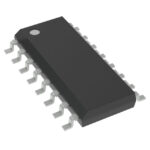 VIPER17LD
The activity of extra discounts on wholesale prices is in full swing…
Please fill in your contact information and we will send you the latest wholesale price list.





