 ChipApex | Global Electronic Components Supplier
SEARCH
Search Product
Search Post
— IC芯片 | 连接器 | 传感器 | 被动器件 —
Search productSearch post
— IC芯片 | 连接器 | 传感器 | 被动器件 —
Consult the customer manager about the wholesale price.
consultation hotline:86-132-6715-2157
email:[email protected]
Contact the product manager for consultation. One-stop consultation is available.
Do you want a lower wholesale price? Please send us your inquiry and we will reply immediately.
The VIPER317HDTR is an energy-saving off-line high voltage converter from the VIPerPlus family by STMicroelectronics. It integrates an 800 V avalanche-rugged power MOSFET with a PWM current-mode controller. The device supports flyback, buck, and buck-boost topologies. Key electrical parameters include a drain current limit of 710 mA, a switching frequency of 60 kHz ± 7%, and a supply voltage range of 4.5 V to 30 V. It features embedded high-voltage startup, sense FET, error amplifier, and oscillator with frequency jitter. Protection mechanisms include overload/short-circuit, thermal shutdown, overvoltage, and undervoltage/disable.
Verify the specific suffix 'HDTR' against the official STMicroelectronics datasheet to confirm package type (SOIC-Narrow-16) and tape-and-reel packaging configuration. Ensure compatibility with the 60 kHz switching frequency variant within the VIPerPlus family. Cross-reference RoHS compliance status and humidity sensitivity classification prior to procurement.
Select this component when an integrated solution combining an 800 V power switch and PWM control is required for offline applications. The 710 mA current limit suits moderate power levels. Consider the 60 kHz jittered frequency for EMI optimization. Verify that the SOIC-Narrow-16 package fits the PCB layout constraints and that the 4.5 V to 30 V supply range meets auxiliary power requirements.
The VIPER317HDTR belongs to the VIPerPlus family of high-voltage converters. This series is designed to meet stringent energy-saving standards through low consumption and pulse frequency modulation at light loads. The family shares common architectural features such as the 800 V MOSFET integration and advanced protection schemes, differentiating models primarily by current limits and switching frequencies.
Official substitutes within the same family include VIPER318HDTR (850 mA limit) and VIPER319HDTR (990 mA limit). These parts share identical pinouts and functional blocks but offer higher current capabilities. Verify that the increased current rating does not exceed transformer or output stage design limits before substitution.
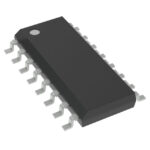 VIPER317HDTR
The activity of extra discounts on wholesale prices is in full swing…
Please fill in your contact information and we will send you the latest wholesale price list.





