 ChipApex | Global Electronic Components Supplier
SEARCH
Search Product
Search Post
— IC芯片 | 连接器 | 传感器 | 被动器件 —
Search productSearch post
— IC芯片 | 连接器 | 传感器 | 被动器件 —
Consult the customer manager about the wholesale price.
consultation hotline:86-132-6715-2157
email:[email protected]
Contact the product manager for consultation. One-stop consultation is available.
Do you want a lower wholesale price? Please send us your inquiry and we will reply immediately.
The VIPER318XDTR is an offline high-voltage converter from the VIPerPlus family, integrating an 800 V avalanche-rugged power MOSFET with a PWM current-mode controller. It supports flyback, buck, and buck-boost topologies with a switching frequency of 30 kHz ±7%. The device delivers a drain current limit of 850 mA and operates within a supply voltage range of 4.5 V to 30 V. It features jittered frequency for EMI reduction, embedded soft-start, and comprehensive protections including overload, short-circuit, overvoltage, and thermal shutdown.
Verify the specific suffix 'X' indicates the 30 kHz switching frequency variant when ordering. Confirm package integrity for the 16-SOIC form factor upon receipt. Ensure compliance with RoHS3 standards as specified in official documentation. Cross-reference the manufacturer part number with authorized distributor listings to validate authenticity and traceability before integration into production schedules.
Select this component for applications requiring a fixed 30 kHz operating frequency within the VIPER31 series. It is suitable for designs needing 850 mA current limiting and support for non-isolated or isolated flyback topologies. Consider the 16-SOIC package constraints and thermal performance requirements. Evaluate system EMI filtering needs against the benefits of the integrated jitter feature for cost optimization in the power stage design.
This device belongs to the VIPerPlus family of high-voltage converters from STMicroelectronics. It shares architectural similarities with other VIPER31 variants but is distinguished by its specific 30 kHz frequency designation. The family emphasizes energy efficiency through pulse frequency modulation at light loads and low no-load consumption, targeting stringent global energy-saving standards for offline power applications.
Consider VIPER318LDTR for a 60 kHz frequency option or VIPER318HDTR for 132 kHz. Verify pin compatibility and thermal characteristics when substituting within the VIPER318 series. Ensure the alternative variant meets the specific switching frequency requirements of the target application design.
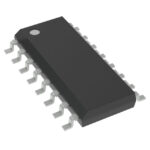 VIPER318XDTR
The activity of extra discounts on wholesale prices is in full swing…
Please fill in your contact information and we will send you the latest wholesale price list.






