 ChipApex | Global Electronic Components Supplier
SEARCH
Search Product
Search Post
— IC芯片 | 连接器 | 传感器 | 被动器件 —
Search productSearch post
— IC芯片 | 连接器 | 传感器 | 被动器件 —
Consult the customer manager about the wholesale price.
consultation hotline:86-132-6715-2157
email:[email protected]
Contact the product manager for consultation. One-stop consultation is available.
Do you want a lower wholesale price? Please send us your inquiry and we will reply immediately.
The VIPER38HDTR is a high-voltage AC/DC converter from the VIPerPlus family, integrating an 800 V rugged power MOSFET with PWM current-mode control. It operates at a fixed frequency of 115 kHz with a maximum duty cycle of 80%. The device supports a flyback topology and delivers up to 18 W output power. Input voltage ranges from 8.5 V to 23.5 V, while the integrated MOSFET withstands 800 V. Quiescent current is 3.5 mA. It functions within a temperature range of -40 °C to +150 °C and is housed in a SOIC-Narrow-16 package.
Verify the specific suffix HDTR corresponds to the 115 kHz H-type variant and SOIC-Narrow-16 packaging. Confirm RoHS compliance status via official datasheets. Ensure design accounts for the non-isolated insulation classification if applicable to the system architecture. Validate thermal management requirements given the +150 °C maximum operating temperature rating.
Select this component for designs requiring peak power capability with fixed-frequency operation. The H-type designation indicates the 115 kHz switching frequency, distinct from the L-type 60 kHz variant. Consider the integrated protections and jittered frequency for EMI reduction. Ensure the application benefits from the low standby consumption and burst mode efficiency characteristics inherent to the VIPerPlus family.
The VIPER38HDTR belongs to STMicroelectronics' VIPerPlus family of high-voltage converters. This series is characterized by the integration of an 800 V power MOSFET and PWM controller on a single chip. The family targets energy-efficient offline power supplies, offering features like soft-start, thermal shutdown, and automatic restart to enhance system reliability and reduce printed circuit board footprint.
The VIPER38LDTR serves as a functional substitute within the same family, differing primarily in its 60 kHz operating frequency compared to the 115 kHz frequency of the VIPER38HDTR. Designers must verify transformer specifications and EMI filter components when swapping between these variants due to the frequency change.
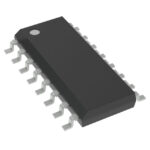 VIPER38HDTR
The activity of extra discounts on wholesale prices is in full swing…
Please fill in your contact information and we will send you the latest wholesale price list.







