 ChipApex | Global Electronic Components Supplier
SEARCH
Search Product
Search Post
— IC芯片 | 连接器 | 传感器 | 被动器件 —
Search productSearch post
— IC芯片 | 连接器 | 传感器 | 被动器件 —
Consult the customer manager about the wholesale price.
consultation hotline:86-132-6715-2157
email:[email protected]
Contact the product manager for consultation. One-stop consultation is available.
Do you want a lower wholesale price? Please send us your inquiry and we will reply immediately.
The VNH3SP30TR-E is a fully integrated automotive H-bridge motor driver designed for high-power applications. It incorporates a dual monolithic high-side driver and two low-side switches within a MultiPowerSO-30 package. The device supports an output current of 30 A and operates with a supply voltage range from 5.5 V to 36 V, with a maximum collector-emitter voltage of 40 V. It features 5 V logic level compatible inputs and PWM operation up to 10 kHz. The component is qualified under AEC-Q100 standards and functions within a temperature range of -40°C to +150°C.
Verify that the specific part number suffix matches the required reel or cut tape configuration, as packaging options vary. Confirm AEC-Q100 qualification status is required for the target automotive application. Ensure the MultiPowerSO-30 package thermal pads are properly soldered to the PCB ground plane to maintain specified thermal performance and reliability in harsh environments.
Select this component for applications requiring a single-chip solution for brushed DC motors with high current demands. The 30 A output capability suits heavy-duty actuator control. Consider the 10 kHz PWM limit when designing control loops. The symmetrical mechanical design facilitates board-level manufacturability. Verify input signal compatibility with the host microcontroller's voltage levels before integration.
This device belongs to the VNH3SP30-E series, which represents STMicroelectronics' dedicated full-bridge motor drivers for automotive use. The series utilizes proprietary EHD (STripFET) process for low-side switches and VIPower technology for high-side integration. The MultiPowerSO-30 package is specifically engineered for improved thermal dissipation and robustness in automotive electrical systems.
Public confirmed substitute part numbers are not available in the provided documentation. Designers should consult official STMicroelectronics resources for potential pin-compatible alternatives or updated series members if sourcing constraints exist.
Motor direction is selected by interfacing the INA and INB input signals directly with the microcontroller, which determines the state of the internal switches.
A low level state on the PWM pin turns off both the LSA and LSB switches, effectively braking or stopping the motor depending on the bridge configuration.
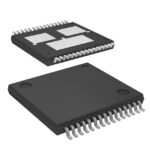 VNH3SP30TR-E
The activity of extra discounts on wholesale prices is in full swing…
Please fill in your contact information and we will send you the latest wholesale price list.





