 ChipApex | Global Electronic Components Supplier
SEARCH
Search Product
Search Post
— IC芯片 | 连接器 | 传感器 | 被动器件 —
Search productSearch post
— IC芯片 | 连接器 | 传感器 | 被动器件 —
Consult the customer manager about the wholesale price.
consultation hotline:86-132-6715-2157
email:[email protected]
Contact the product manager for consultation. One-stop consultation is available.
Do you want a lower wholesale price? Please send us your inquiry and we will reply immediately.
The VO3063-X016 is a Triac and SCR output optocoupler manufactured by Vishay Semiconductor Opto Division. It features a phototriac output with an integrated zero-crossing detection circuit, ensuring low electromagnetic interference during switching. The device provides high isolation capability with an insulation voltage of 5300 Vrms. Key electrical parameters include a maximum forward current of 60 mA, a peak forward voltage of 1.2 V, and a power dissipation rating of 300 mW. The output triac supports a repetitive peak off-state voltage of 600 V and a maximum continuous output current of 100 mA. Triggering is achieved with a maximum LED trigger current of 5 mA. The component exhibits a minimum static dV/dt rating of 1.5 kV/µs and operates within a temperature range of -40°C to +100°C.
Verify the specific suffix X016 to confirm tube packaging and compliance requirements. Ensure the selected variant matches the required insulation voltage and package type for your design. Cross-reference official datasheets for any recent product change notifications or material declarations before finalizing procurement orders.
Select this component when zero-crossing functionality is mandatory to minimize electrical noise in AC load control. The 600 V blocking voltage suits standard mains applications. Consider the 5300 Vrms isolation for stringent safety standards. Verify thermal management needs given the 300 mW power dissipation limit under varying ambient conditions.
This part belongs to the VO306x family of zero-crossing phototriacs from Vishay. It shares functional similarities with other models like the VO3062 but differs in internal circuitry for zero-crossing detection. The series is designed for reliable AC switching in isolated environments, offering a balance of performance and safety certification for global markets.
Public confirmed substitute part numbers are not available in the provided documentation. Verify compatibility with alternative zero-crossing triac optocouplers based on pinout, isolation voltage, and trigger current specifications.
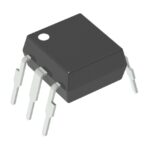 VO3063-X016
The activity of extra discounts on wholesale prices is in full swing…
Please fill in your contact information and we will send you the latest wholesale price list.





