 ChipApex | Global Electronic Components Supplier
SEARCH
Search Product
Search Post
— IC芯片 | 连接器 | 传感器 | 被动器件 —
Search productSearch post
— IC芯片 | 连接器 | 传感器 | 被动器件 —
Consult the customer manager about the wholesale price.
consultation hotline:86-132-6715-2157
email:[email protected]
Contact the product manager for consultation. One-stop consultation is available.
Do you want a lower wholesale price? Please send us your inquiry and we will reply immediately.
The VO4157M is a single-channel Triac and SCR output optocoupler manufactured by Vishay Semiconductor Opto Division. It features an integrated zero-crossing detection circuit for precise AC power control. The device utilizes a PhotoTriac output capable of handling a peak repetitive off-state voltage (VDRM) of 400 V and a maximum continuous output current of 300 mA. It operates with a forward current up to 60 mA and provides high isolation voltage of 5300 Vrms. The component is available in a 6-lead SMD package, specifically the PDIP-6 Gull Wing configuration, suitable for surface mount assembly.
Verify the specific suffix designation when ordering, as it determines the packaging format such as tube or reel quantities. Confirm RoHS compliance status through official datasheets prior to integration. Ensure the selected variant matches the required lead-free specifications for modern manufacturing processes. Cross-reference pinout diagrams with PCB layout requirements to prevent mounting errors during assembly.
Select this component for applications requiring precise timing alignment with AC mains cycles. The integrated zero-crossing feature reduces electromagnetic interference compared to random turn-on devices. Evaluate the 400 V blocking capability against the peak line voltage of the target application. Consider the 300 mA output current limit when sizing the load or gate drive requirements for the controlled TRIAC or SCR.
This part belongs to the VO415x series of Triac and SCR output optocouplers from Vishay. These components are engineered for robust performance in AC power control environments. The series offers various packages including DIP and SMD options to accommodate different board space constraints. They serve as critical interface elements between low-voltage logic controllers and high-voltage AC loads.
The VO4258M is identified as a comparable alternative within the same manufacturer portfolio. Both parts share similar TRIAC output characteristics and isolation ratings. Verify pin compatibility and electrical parameters before substituting to ensure circuit functionality remains intact.
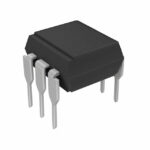 VO4157M
The activity of extra discounts on wholesale prices is in full swing…
Please fill in your contact information and we will send you the latest wholesale price list.





