 ChipApex | Global Electronic Components Supplier
SEARCH
Search Product
Search Post
— IC芯片 | 连接器 | 传感器 | 被动器件 —
Search productSearch post
— IC芯片 | 连接器 | 传感器 | 被动器件 —
Consult the customer manager about the wholesale price.
consultation hotline:86-132-6715-2157
email:[email protected]
Contact the product manager for consultation. One-stop consultation is available.
Do you want a lower wholesale price? Please send us your inquiry and we will reply immediately.
The VO4254M is a non-zero-crossing phototriac output optocoupler manufactured by Vishay Semiconductor Opto Division. It integrates a Gallium Arsenide infrared LED optically coupled to a photosensitive TRIAC within a six-pin DIP package. The device provides an isolation voltage of 5300 Vrms and supports a maximum continuous output current of 300 mA. It operates with a peak forward current of 60 mA and features a low gate trigger current of 2 mA. The unit withstands a blocking voltage of 400 V and functions reliably across a temperature range from -55°C to +100°C.
Verify the specific suffix designation, as variations such as X006 or X007 may indicate different packaging formats like tubes or tape-and-reel. Confirm availability status directly with authorized distributors, as lead times and stock levels fluctuate based on production cycles. Ensure compliance with RoHS directives and check for any recent Product Change Notifications regarding material updates before finalizing procurement orders.
Select this component when immediate phase-angle firing is required without zero-crossing delay. Compare the 400 V blocking voltage against circuit requirements; higher voltage variants like the VO4256 exist for more demanding loads. Verify that the 300 mA RMS output current meets the load specifications. Consider the DIP-6 through-hole package constraints if surface-mount alternatives are preferred for automated assembly processes.
This part belongs to the VO425x series of high-speed, high-dV/dt phototriac optocouplers. The series utilizes GaAs IR LEDs for efficient optical coupling. The 'M' suffix typically denotes the standard PDIP-6 through-hole package variant, distinguishing it from surface-mount options like the VO4254D. These devices are engineered for reliable AC power switching in industrial and consumer electronics.
The VO4256M serves as a direct functional substitute offering identical pinouts and features but with a higher 600 V blocking voltage rating. Other Vishay models in the same family share similar electrical characteristics and packaging options.
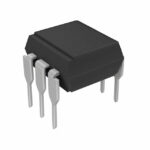 VO4254M
The activity of extra discounts on wholesale prices is in full swing…
Please fill in your contact information and we will send you the latest wholesale price list.





