 ChipApex | Global Electronic Components Supplier
SEARCH
Search Product
Search Post
— IC芯片 | 连接器 | 传感器 | 被动器件 —
Search productSearch post
— IC芯片 | 连接器 | 传感器 | 被动器件 —
Consult the customer manager about the wholesale price.
consultation hotline:86-132-6715-2157
email:[email protected]
Contact the product manager for consultation. One-stop consultation is available.
Do you want a lower wholesale price? Please send us your inquiry and we will reply immediately.
The VO4256H is a non-zero-crossing photo-triac output optocoupler manufactured by Vishay Semiconductor Opto Division. It features a single channel with an insulation voltage of 5300 Vrms and a peak repetitive off-state voltage (VDRM) of 600 V. The device supports a maximum continuous output current of 300 mA and operates within a temperature range of -55°C to +100°C. Key electrical parameters include a forward current of 60 mA, a forward voltage of 1.2 V, and a power dissipation of 600 mW. The maximum trigger current is specified at 2 mA.
Verify the specific suffix designation when ordering, as packaging variations exist. Confirm availability status directly with authorized distributors or the manufacturer, as supply levels fluctuate. Ensure the selected package type matches the intended PCB layout requirements before finalizing procurement decisions.
Select this component for circuits requiring high isolation voltage and fast triac triggering without zero-crossing delay. Compare the 600 V blocking voltage against system line voltages to ensure adequate safety margins. Consider the 2 mA trigger current sensitivity for low-power microcontroller interfaces.
This part belongs to the VO425x series of phototriac optocouplers from Vishay. It shares common characteristics with siblings like the VO4254H and VO4258H, primarily differing in their off-state voltage ratings. The series is designed for general-purpose AC load switching where precise timing relative to the AC waveform zero-crossing is not required.
Direct substitutes include the VO4256M, which offers similar performance but may have different trigger current specifications. Verify pinout compatibility and thermal characteristics when cross-referencing with other manufacturers' equivalents.
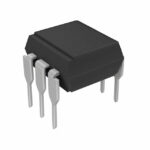 VO4256H
The activity of extra discounts on wholesale prices is in full swing…
Please fill in your contact information and we will send you the latest wholesale price list.






