 ChipApex | Global Electronic Components Supplier
SEARCH
Search Product
Search Post
— IC芯片 | 连接器 | 传感器 | 被动器件 —
Search productSearch post
— IC芯片 | 连接器 | 传感器 | 被动器件 —
Consult the customer manager about the wholesale price.
consultation hotline:86-132-6715-2157
email:[email protected]
Contact the product manager for consultation. One-stop consultation is available.
Do you want a lower wholesale price? Please send us your inquiry and we will reply immediately.
The VOT8024AB-T is a single-channel phototriac optocoupler manufactured by Vishay Semiconductor Opto Division. It integrates a Gallium Arsenide infrared LED with a photosensitive zero-crossing triac output, housed in a compact SMD-4 surface-mount package. The device features an isolation voltage of 5300 Vrms and supports a maximum forward current of 50 mA with a forward voltage of 1.2 V. It operates within a temperature range of -55°C to +110°C and provides an off-state repetitive peak voltage (VDRM) of 800 V.
Verify the specific suffix designation when ordering, as packaging variants such as VT1 indicate different reel quantities compared to standard tape-and-reel configurations. Confirm RoHS compliance status through official manufacturer documentation prior to integration into regulated assemblies. Ensure the selected package variant matches the intended PCB footprint and automated placement requirements.
Select this component for applications demanding high-voltage isolation and noise immunity in AC power control environments. The zero-crossing feature minimizes electromagnetic interference during turn-on, making it suitable for sensitive electronic loads. Evaluate the thermal management requirements based on the specified power dissipation limits and operating temperature range to ensure long-term reliability in enclosed designs.
This device belongs to Vishay's family of Triac and SCR output optoisolators designed for robust AC switching applications. The VOT8024 series utilizes advanced semiconductor technology to achieve high isolation voltages while maintaining compact physical dimensions. These components are engineered to replace mechanical relays in modern electronics, offering longer operational lifespans and faster switching speeds without contact bounce issues.
Direct replacements include the VOT8024AD which shares similar functional characteristics but may differ in package type or specific electrical tolerances. Verify pinout compatibility and isolation voltage ratings before substituting to ensure circuit integrity and safety compliance in existing designs.
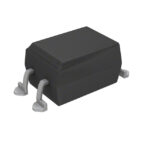 VOT8024AB-T
The activity of extra discounts on wholesale prices is in full swing…
Please fill in your contact information and we will send you the latest wholesale price list.





