ChipApex | Global Electronic Components Supplier

SEARCH
Search Product
Search Post
Search productSearch post
Consult the customer manager about the wholesale price.
consultation hotline:86-132-6715-2157
email:[email protected]
Contact the product manager for consultation. One-stop consultation is available.
Do you want a lower wholesale price? Please send us your inquiry and we will reply immediately.
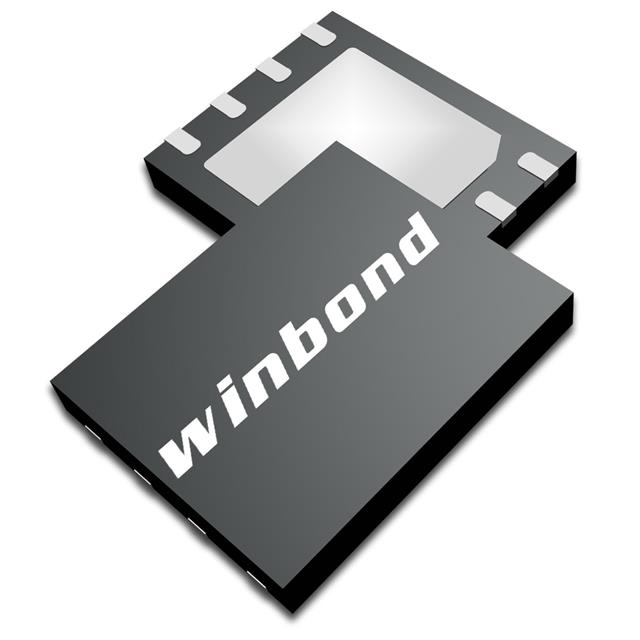
W25M02GVZEIT is listed in the Memory IC range at ChipApex. The manufacturer field lists Winbond Electronics. Its product description is IC FLASH 2GBIT SPI/QUAD 8WSON. Review the specifications below when checking this part for your BOM.
The W25M02GVZEIT is a 2G-bit (2 x 1G-bit) Serial MCP Flash memory based on the W25N series, featuring two stacked W25N01GV dies in a TFBGA-24 package. It supports Standard, Dual, and Quad SPI interfaces with clock frequencies up to 104MHz. The device operates on a single 2.7V to 3.6V supply and functions within a temperature range of -40°C to +85°C. Key capabilities include Concurrent Operations for independent die access, Continuous Read Mode for efficient array access, and built-in ECC and bad block management.
Verify the specific suffix IT against the manufacturer's current datasheet revision to confirm package type and operational voltage. Ensure compatibility with host controller SPI modes supporting dual and quad I/O instructions. Confirm availability of ECAD models for PCB layout integration prior to procurement.
Select this component when high density is required in a low pin-count package compared to standard NAND flash. Consider the SpiStack architecture if concurrent read and program operations are necessary to improve system throughput. Verify that the host system supports the required 104MHz SPI clock speeds for optimal performance.
This part belongs to the Winbond W25M SpiStack series, which stacks multiple W25N serial SLC NAND flash dies into space-saving packages. It utilizes a Software Die Select instruction to manage access to individual dies within the multi-chip package, distinguishing it from single-die W25N variants.
W25M02GVTBIT
Only a single die can be active and control the SPI interface at any given time. The Software Die Select instruction is used to activate a specific die, preventing bus contention.
Continuous Read Mode allows direct read access to the entire array with a single command, eliminating the need to issue Page Data Read commands between reads, whereas Buffer Read requires reloading the buffer for each new read operation.
Explore related parts through Memory, Integrated Circuits (ICs), all product categories, ChipApex homepage.
 W25M02GVZEIT

The activity of extra discounts on wholesale prices is in full swing…
Please fill in your contact information and we will send you the latest wholesale price list.