ChipApex | Global Electronic Components Supplier
SEARCH
Search Product
Search Post
— IC芯片 | 连接器 | 传感器 | 被动器件 —
Search productSearch post
— IC芯片 | 连接器 | 传感器 | 被动器件 —
Consult the customer manager about the wholesale price.
consultation hotline:86-132-6715-2157
email:[email protected]
Contact the product manager for consultation. One-stop consultation is available.
Do you want a lower wholesale price? Please send us your inquiry and we will reply immediately.
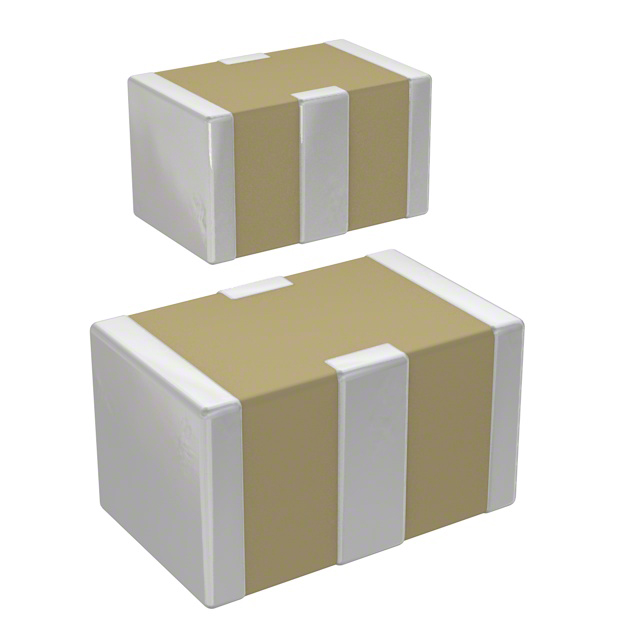
The W2H11A10184T1F is a four-terminal feedthrough capacitor from the KYOCERA AVX W2H Auto series, designed for high-current applications. It features a capacitance of 100 pF with a tolerance of -20% to +50%, rated for 100 VDC. The component operates within a temperature range of -55°C to +125°C and utilizes NP0 dielectric material. It supports a current rating of 500 mA and has a maximum DC resistance of 150 mOhms. Housed in an 0805 (2012 metric) surface-mount package measuring 2.01 mm x 1.25 mm x 1.14 mm, it meets AEC-Q200 automotive qualification standards.
Verify the specific suffix '4' in the part number against official datasheets to confirm the exact terminal configuration and termination type. Ensure that the -20% to +50% capacitance tolerance aligns with circuit design requirements. Confirm AEC-Q200 certification status if deploying in regulated automotive environments. Cross-reference manufacturer documentation for any recent packaging or material composition updates.
Select this component when high-frequency noise suppression is required on power rails carrying up to 500 mA. The four-terminal design is preferred over two-terminal variants for superior RF attenuation. Consider the 0805 footprint constraints during PCB layout. Verify that the 100 VDC rating exceeds the maximum operating voltage of the target application to ensure long-term reliability.
This component belongs to the W2H Auto series, which specializes in feedthrough capacitors for automotive electronics. The series is characterized by its ability to handle high currents while maintaining effective filtering capabilities. It complements other components in the W2H family, offering various capacitance values and voltage ratings tailored for diverse automotive power and signal integrity needs.
The W2H11A1018AT1F is a related variant within the same series but differs in current rating and internal resistance specifications. Verify compatibility before substitution, as the electrical performance characteristics may not be identical. Consult official substitution guides for confirmed equivalent parts.
 W2H11A10184T1F
The activity of extra discounts on wholesale prices is in full swing…
Please fill in your contact information and we will send you the latest wholesale price list.