 ChipApex | Global Electronic Components Supplier
SEARCH
Search Product
Search Post
— IC芯片 | 连接器 | 传感器 | 被动器件 —
Search productSearch post
— IC芯片 | 连接器 | 传感器 | 被动器件 —
Consult the customer manager about the wholesale price.
consultation hotline:86-132-6715-2157
email:[email protected]
Contact the product manager for consultation. One-stop consultation is available.
Do you want a lower wholesale price? Please send us your inquiry and we will reply immediately.
The W83310G-R2 TR is a linear bus termination regulator designed for DDR SDRAM applications. It integrates power MOSFETs to provide bidirectional current sinking and driving capabilities, achieving peak currents of 2.0 Amps and continuous currents of 1.8 Amps. The device operates with +3.3V and +2.5V control power supplies. Key electrical characteristics include low output voltage offset and low external component count requirements. This integrated solution supports SSTL-2 and SSTL-3 standards, offering a cost-effective alternative to discrete termination circuits while maintaining high performance in active termination scenarios.
Verify the specific suffix 'TR' indicates tape and reel packaging when sourcing. Confirm the manufacturer designation as Nuvoton Technology Corporation, noting that Winbond datasheets may reference similar part numbers. Ensure the order matches the exact model number to guarantee compatibility with DDR SDRAM bus termination requirements. Check for any specific environmental or operating temperature ratings if required for the application.
Select this component for DDR SDRAM designs requiring active termination with minimal external components. The integrated MOSFET design reduces board space and simplifies layout compared to discrete solutions. Consider the peak and continuous current ratings to ensure adequate drive strength for the target memory bus. Verify compatibility with the system's +3.3V or +2.5V control power domains before integration.
This regulator belongs to a family of bus termination devices used in high-speed digital interfaces. It addresses the need for precise voltage regulation on data lines to minimize signal reflections. The integration of power stages within a small package allows for efficient thermal management and reduced parasitic effects in dense PCB layouts typical of modern computing hardware.
Cross-reference with other bus termination regulators from Nuvoton or compatible manufacturers. Ensure substitute parts maintain identical bidirectional current capabilities and control voltage inputs. Verify that any replacement offers equivalent SSTL-2 and SSTL-3 support without altering the system's impedance matching requirements.
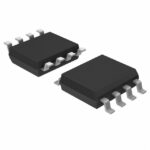 W83310G-R2 TR
The activity of extra discounts on wholesale prices is in full swing…
Please fill in your contact information and we will send you the latest wholesale price list.





