 ChipApex | Global Electronic Components Supplier
SEARCH
Search Product
Search Post
— IC芯片 | 连接器 | 传感器 | 被动器件 —
Search productSearch post
— IC芯片 | 连接器 | 传感器 | 被动器件 —
Consult the customer manager about the wholesale price.
consultation hotline:86-132-6715-2157
email:[email protected]
Contact the product manager for consultation. One-stop consultation is available.
Do you want a lower wholesale price? Please send us your inquiry and we will reply immediately.
The Panasonic WM-64C is a small, thin, omnidirectional electret condenser microphone designed for high resistance to vibrations. It features an analog output and operates within a frequency range of 50 Hz to 15 kHz. The device requires a supply voltage between 2 V and 10 V with a typical supply current of 500 µA. Key electrical parameters include a sensitivity of -45 dB ±4 dB at 94 dB SPL (referenced at 1 V/Pa), an impedance of 2.2 kOhms, and a signal-to-noise ratio of 58 dB. Physically, it has a circular shape with a diameter of 6.00 mm and a maximum height of 2.20 mm, utilizing top porting and pad termination.
Verify component status as the WM-64C is officially obsolete and no longer manufactured by Panasonic Industry. Sourcing should focus on available surplus stock or authorized distributors holding remaining inventory. Confirm that any acquired units meet original specifications, as long-term storage may affect performance. Ensure compatibility with existing PCB layouts before procurement.
Select this component only if its specific dimensional constraints and vibration-resistant characteristics align with the design requirements. Note that the part is discontinued; therefore, availability is limited. Evaluate alternative components if long-term production stability is required. Ensure the application environment supports the specified operating voltage range and does not exceed the physical dimensions of the package.
The WM-64C belongs to the WM-64 series of microphones produced by Panasonic Industry. This series includes similar models such as the WM-64K, which shares identical electrical and physical specifications. These components are categorized under audio products and specifically as electret condenser microphones. The series is designed for applications demanding reliable analog audio capture in compact devices.
The POM-2245L-C33-R by PUI Audio, Inc. is listed as a direct substitute. Verify pinout compatibility and mounting hole alignment when transitioning to this alternative. Ensure the replacement meets the same sensitivity and voltage requirements for seamless integration.
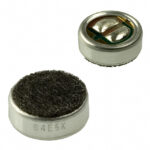 WM-64C
The activity of extra discounts on wholesale prices is in full swing…
Please fill in your contact information and we will send you the latest wholesale price list.






