 ChipApex | Global Electronic Components Supplier
SEARCH
Search Product
Search Post
— IC芯片 | 连接器 | 传感器 | 被动器件 —
Search productSearch post
— IC芯片 | 连接器 | 传感器 | 被动器件 —
Consult the customer manager about the wholesale price.
consultation hotline:86-132-6715-2157
email:[email protected]
Contact the product manager for consultation. One-stop consultation is available.
Do you want a lower wholesale price? Please send us your inquiry and we will reply immediately.
The WM8978CGEFL/RV is a stereo audio codec manufactured by Cirrus Logic, designed for portable digital devices. It integrates stereo DACs and ADCs, differential microphone preamplifiers, headphone amplifiers, and speaker drivers within a 32-pin QFN package. The device supports I2S and PCM interfaces with 16-bit and 24-bit resolution at typical sampling rates of 48 kHz. Key electrical parameters include a DAC signal-to-noise ratio of 98 dB and an ADC signal-to-noise ratio of 95 dB. The headphone output delivers up to 40 mW per channel into a 16-ohm load, while the speaker driver provides up to 1 W in bridge-tied load mode with an 8-ohm load. Operating voltage ranges from 2.5 V to 3.6 V.
Verify component authenticity through authorized distributors or direct manufacturer channels due to potential availability constraints. Confirm RoHS compliance status and moisture sensitivity levels prior to PCB assembly. Review the latest datasheet revision history for any pinout or electrical specification updates that may affect existing designs.
Select this component when a compact solution is required for portable audio applications needing integrated playback and recording capabilities. Ensure the host processor supports the necessary serial interface protocols. Evaluate power supply requirements carefully, as the analog section operates at 2.5 V to 3.6 V while the speaker driver may require a separate 5 V rail for maximum output power.
This model represents a specific variant of the WM8978 series, featuring a 32-pin QFN package with exposed pad thermal enhancement. It serves as a functional upgrade over the earlier WM8974 model, providing comprehensive stereo functionality in a smaller footprint. The part is widely recognized for its balance of audio quality and power efficiency in embedded systems.
Direct substitutes are not explicitly listed in public documentation. Designers should evaluate other Cirrus Logic codecs such as the WM8974 or WM8983 based on interface compatibility and pinout similarities. Verify that alternative components meet the same SNR and output power specifications for the target application.
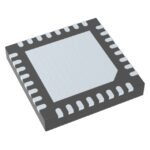 WM8978CGEFL/RV
The activity of extra discounts on wholesale prices is in full swing…
Please fill in your contact information and we will send you the latest wholesale price list.






