 ChipApex | Global Electronic Components Supplier
SEARCH
Search Product
Search Post
— IC芯片 | 连接器 | 传感器 | 被动器件 —
Search productSearch post
— IC芯片 | 连接器 | 传感器 | 被动器件 —
Consult the customer manager about the wholesale price.
consultation hotline:86-132-6715-2157
email:[email protected]
Contact the product manager for consultation. One-stop consultation is available.
Do you want a lower wholesale price? Please send us your inquiry and we will reply immediately.
The Knowles WP-23502-P16 is a subminiature electret condenser microphone designed for omnidirectional sound pickup. It features wire lead termination and operates within a supply voltage range of 1.3 V to 10 V, with a rated voltage of 1.3 V. The device has an impedance of 4.4 kOhms and a current rating of 50 uA. Sensitivity is specified at -52 dB ±3 dB relative to 0 dB = 1 V/Pa at 74 dB SPL. The frequency response spans from 100 Hz to 4 kHz. Physical dimensions are 5.56 mm in length, 3.99 mm in width, and a maximum height of 2.26 mm.
Verify the specific ordering suffix against the manufacturer's official documentation to ensure correct sensitivity and tolerance specifications. Confirm that the wire lead termination matches the target assembly requirements. Check for any environmental ratings such as waterproofing if the application involves exposure to moisture or harsh conditions. Ensure the operating voltage range aligns with the system power supply constraints.
Select this component when a compact, omnidirectional electret microphone is required for automotive or general audio applications. Consider the 100 Hz to 4 kHz frequency response suitability for voice-centric use cases. Evaluate the 50 uA current consumption against battery-powered system limitations. Ensure the physical dimensions fit within the designated enclosure space while accounting for mounting clearances.
This part belongs to the Knowles WP-23502 series of subminiature electret microphones. The series is characterized by compact sizes designed for high-performance audio capture in rugged environments. Variants within the series may differ in sensitivity, tolerance, or termination style, but share the fundamental electret condenser technology and small footprint.
Direct substitutes must match the 4.4 kOhm impedance, 50 uA current rating, and similar dimensional constraints. Verify that alternative parts support the 1.3 V to 10 V operating range and provide comparable omnidirectional polar patterns. Cross-reference sensitivity levels to ensure signal integrity compatibility.
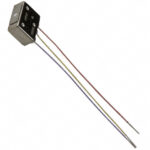 WP-23502-P16
The activity of extra discounts on wholesale prices is in full swing…
Please fill in your contact information and we will send you the latest wholesale price list.





