 ChipApex | Global Electronic Components Supplier
SEARCH
Search Product
Search Post
— IC芯片 | 连接器 | 传感器 | 被动器件 —
Search productSearch post
— IC芯片 | 连接器 | 传感器 | 被动器件 —
Consult the customer manager about the wholesale price.
consultation hotline:86-132-6715-2157
email:[email protected]
Contact the product manager for consultation. One-stop consultation is available.
Do you want a lower wholesale price? Please send us your inquiry and we will reply immediately.
The X1228S14Z is a Real-Time Clock (RTC) integrated circuit manufactured by Renesas Electronics Corporation. It integrates a clock/calendar, CPU supervisor, and 512-byte EEPROM within a single device. The component communicates via an I²C, 2-wire serial interface. It operates with a supply voltage range of 2.7V to 5.5V and supports battery backup voltages from 1.8V to 5.5V. The timekeeping current consumption is specified between 10µA and 20µA at 2.7V to 5V. The device is housed in a 14-SOIC package with a width of 0.154 inches (3.90mm).
The X1228S14Z is classified as obsolete and no longer manufactured by Renesas Electronics Corporation. Verification of availability should focus on surplus distributors or secondary markets. Designers must confirm the RoHS status of available stock, as earlier production runs may not comply with current environmental regulations. Replacement components should be evaluated for pin compatibility and functional equivalence before procurement.
Select this component only if legacy compatibility with the X1228 family is required. Verify that the 14-SOIC package dimensions fit the target PCB layout. Ensure the application can accommodate the I²C interface timing specifications. Consider the operating temperature range of -40°C to 85°C against environmental conditions. Evaluate alternative modern RTCs if new design constraints allow for updated packaging or interfaces.
The X1228S14Z belongs to the X1228 series, which combines RTC, EEPROM, and supervisor functions. This series was originally developed by Intersil and later acquired by Renesas. The 'S14' suffix denotes the 14-pin SOIC package variant. Similar parts in the family include the X1228S14I and X1228V14IZ, differing primarily in package type or temperature grade.
Publicly documented substitutes include the DS1388Z-5+ from Analog Devices Inc./Maxim Integrated and the BU9873NUX-TTR from Rohm Semiconductor. These alternatives offer similar RTC and EEPROM functionalities but require verification of pinout compatibility and software register mapping differences.
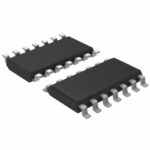 X1228S14Z
The activity of extra discounts on wholesale prices is in full swing…
Please fill in your contact information and we will send you the latest wholesale price list.





