 ChipApex | Global Electronic Components Supplier
SEARCH
Search Product
Search Post
— IC芯片 | 连接器 | 传感器 | 被动器件 —
Search productSearch post
— IC芯片 | 连接器 | 传感器 | 被动器件 —
Consult the customer manager about the wholesale price.
consultation hotline:86-132-6715-2157
email:[email protected]
Contact the product manager for consultation. One-stop consultation is available.
Do you want a lower wholesale price? Please send us your inquiry and we will reply immediately.
The X1288S16-2.7 is a 2-Wire Serial Real-Time Clock/Calendar and CPU Supervisor with integrated EEPROM, manufactured by Renesas Electronics Corporation. It operates within a supply voltage range of 2.7V to 5.5V, ensuring reliable functionality across standard industrial voltage levels. The device features an I²C-compatible 2-Wire Serial interface for communication. Key internal components include a real-time clock/calendar with leap year compensation, alarm capabilities, and a watchdog timer. It also provides system supervision functions, including reset output, to monitor processor health. The unit includes non-volatile memory for data retention.
Verify the specific suffix 'S16' against official Renesas documentation to confirm package type and tape/reel specifications. Ensure the operating voltage requirements align with your system's 2.7V minimum threshold. Cross-reference the exact part number in Renesas' current product status database to confirm availability and lifecycle stage before finalizing procurement plans.
Select this component when a combined RTC, EEPROM, and supervisor solution is required to minimize board space. It is suitable for applications where I²C bus compatibility is essential. Consider the voltage range if interfacing with 3.3V or 5V logic systems. Evaluate the need for hardware-based reset supervision and watchdog timing to simplify software design complexity.
The X1288 series belongs to Renesas' family of serial real-time clocks and supervisors. These devices are designed to provide essential timing and system management functions in compact packages. The X1288S16-2.7 variant specifically denotes the operational voltage range and package configuration within this lineup, targeting cost-sensitive embedded applications.
Consult Renesas official cross-reference guides for direct substitutes. Verify that any alternative maintains identical 2-Wire interface timing, voltage ranges, and pinout compatibility. Ensure functional equivalence in watchdog and reset behaviors before implementation.
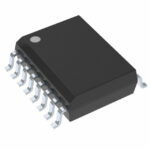 X1288S16-2.7
The activity of extra discounts on wholesale prices is in full swing…
Please fill in your contact information and we will send you the latest wholesale price list.





