 ChipApex | Global Electronic Components Supplier

SEARCH
Search Product
Search Post
Search productSearch post
Consult the customer manager about the wholesale price.
consultation hotline:86-132-6715-2157
email:[email protected]
Contact the product manager for consultation. One-stop consultation is available.
Do you want a lower wholesale price? Please send us your inquiry and we will reply immediately.
X9420YS16IT1 is listed in the Digital Potentiometers range at ChipApex. The manufacturer field lists Renesas Electronics Corporation. Its product description is IC DGTL POT 2.5KOHM 64TAP 16SOIC. Review the specifications below when checking this part for your BOM.
The X9420YS16IT1 is a single digitally controlled potentiometer (XDCP) from the Renesas X9420 series, housed in a 16-lead SOIC package. It features a 2.5kΩ resistor array with 64 taps and linear taper. The device utilizes an SPI serial interface for control and includes one volatile Wiper Counter Register (WCR) and four nonvolatile Data Registers (DR0–DR3). Operating voltages include VCC at 5V ±10% and analog supplies V+/V- ranging from -5.5V to +5.5V. Key electrical parameters include a wiper resistance of 150Ω (at ±3V) or 40Ω (at ±5V), a temperature coefficient of ±300ppm/°C, and standby current under 1µA.
Verify component authenticity through authorized distributors as the part status is listed as obsolete. Confirm RoHS compliance status, noting that specific suffixes like 'Z' indicate Pb-free plus anneal products. Check for moisture sensitivity level (MSL) requirements during storage and handling to ensure proper reflow soldering profiles are maintained.
Select the X9420YS16IT1 when a 2.5kΩ resistance value is required; other variants offer 10kΩ. Ensure the system supports the SPI protocol and provides the necessary supply rails (VCC, V+, V-). Verify that the industrial temperature range (-40°C to +85°C) meets environmental needs. Consider the 16-pin SOIC package dimensions for PCB layout constraints.
This component belongs to the X9420 family of low noise, low power digitally controlled potentiometers. It integrates a solid-state potentiometer with nonvolatile memory on a monolithic CMOS microcircuit. The device serves as a digital replacement for mechanical potentiometers, offering precise control via a host processor without moving parts.
Public datasheets identify ISL22416, ISL22419, ISL95311, and ISL95711 as possible substitute products. Verify pin compatibility and electrical specifications before substitution.
The wiper position is controlled by the user through the SPI bus interface, which updates the Wiper Counter Register (WCR).
Upon power-up, the contents of Data Register 0 (DR0) are automatically recalled to the Wiper Counter Register (WCR).
Yes, a maximum of two devices may occupy the SPI serial bus, distinguished by the A0 address input pin.
Explore related parts through Data Acquisition, Integrated Circuits (ICs), all product categories, ChipApex homepage.
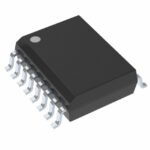 X9420YS16IT1

The activity of extra discounts on wholesale prices is in full swing…
Please fill in your contact information and we will send you the latest wholesale price list.





