 ChipApex | Global Electronic Components Supplier
SEARCH
Search Product
Search Post
— IC芯片 | 连接器 | 传感器 | 被动器件 —
Search productSearch post
— IC芯片 | 连接器 | 传感器 | 被动器件 —
Consult the customer manager about the wholesale price.
consultation hotline:86-132-6715-2157
email:[email protected]
Contact the product manager for consultation. One-stop consultation is available.
Do you want a lower wholesale price? Please send us your inquiry and we will reply immediately.
The XC18V01PC20I is a 3.3V in-system programmable configuration PROM from the XC18V00 series, manufactured by Xilinx (now AMD). It provides 1 Megabit (1,048,576 bits) of non-volatile storage for FPGA configuration bitstreams. The device supports IEEE Std 1149.1 JTAG boundary-scan and in-system programming. It features dual configuration modes: serial (up to 33 MHz) and parallel (up to 264 Mb/s at 33 MHz). The PC20 package is a 20-pin PLCC. I/O pins are 5V tolerant, accepting 5V, 3.3V, and 2.5V signals, with 3.3V or 2.5V output capability. Endurance is rated for 20,000 program/erase cycles over the commercial/industrial temperature range (-40°C to +85°C).
Verify the specific suffix 'PC20' corresponds to the 20-pin PLCC package as documented in the DS026 datasheet. Confirm that the 'I' suffix indicates the industrial temperature range (-40°C to +85°C). Ensure compatibility with the target FPGA's voltage requirements, noting the 5V tolerant I/O feature. Check for obsolescence status as this specification dates from 2003; consult current AMD/Xilinx product lifecycle notices for availability and replacement recommendations.
Select the XC18V01 when the FPGA configuration bitstream size is approximately 1 Megabit. Choose the PC20 package if a 20-pin PLCC footprint is required on the PCB. This device is suitable for designs needing in-system reprogramming capabilities via JTAG. Consider cascading with other XC18V00 family members if larger memory capacity is needed. Ensure the design supports the required serial or parallel interface timing specifications.
The XC18V01 is part of the XC18V00 series of in-system programmable configuration PROMs. This series includes variants with different capacities such as XC18V512 (512-kilobit), XC18V02 (2-megabit), and XC18V04 (4-megabit). These devices are designed specifically to store and provide configuration data to Xilinx FPGAs. The series utilizes a low-power advanced CMOS FLASH process and supports both serial and parallel configuration interfaces.
Public confirmed substitute part numbers are not explicitly listed in the provided source material. Users should consult AMD/Xilinx official documentation for current lifecycle status and recommended replacements for obsolete components.
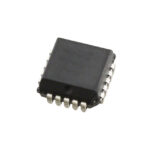 XC18V01PC20I
The activity of extra discounts on wholesale prices is in full swing…
Please fill in your contact information and we will send you the latest wholesale price list.





