 ChipApex | Global Electronic Components Supplier

SEARCH
Search Product
Search Post
— IC芯片 | 连接器 | 传感器 | 被动器件 —
Search productSearch post
— IC芯片 | 连接器 | 传感器 | 被动器件 —
Consult the customer manager about the wholesale price.
consultation hotline:86-132-6715-2157
email:[email protected]
Contact the product manager for consultation. One-stop consultation is available.
Do you want a lower wholesale price? Please send us your inquiry and we will reply immediately.
XC3S50A-5TQG144C is listed in the Field Programmable Gate Array range at ChipApex. The manufacturer field lists AMD. Its product description is IC FPGA 108 I/O 144TQFP. Review the specifications below when checking this part for your BOM.
The XC3S50A-5TQG144C is a field-programmable gate array (FPGA) belonging to the AMD Spartan-3A family, manufactured using a 90 nm process technology. It features 176 logic array blocks and approximately 1,584 logic elements, providing sufficient capacity for embedded control and interface applications. The device includes 55296 bits of on-chip RAM and supports up to 108 user I/O pins. It operates within a core voltage range of 1.14 V to 1.26 V and is rated for an industrial temperature range of -40°C to +100°C TJ. The component is housed in a 144-pin TQFP package with a 20x20 mm footprint.
Verify the specific suffix codes against official AMD documentation to confirm exact speed grades and temperature ratings. Ensure compatibility with legacy design tools such as Xilinx ISE, as newer Vivado versions may have limited support for this older FPGA family. Confirm package dimensions and pinout details prior to PCB layout finalization.
Select this model when moderate logic density and cost-effectiveness are prioritized over high-performance computing. Compare resource utilization against larger Spartan-3A variants if additional logic or memory is required. Consider the TQFP package constraints regarding thermal dissipation and manual assembly feasibility compared to BGA alternatives.
This component is part of the Spartan-3A family, which succeeded the original Spartan-3 series by offering enhanced I/O capabilities and lower power consumption while maintaining compatibility with existing design flows. It targets cost-sensitive markets requiring flexible programmability for interface and control tasks without the complexity of higher-end Virtex or Kintex devices.
Direct pin-to-pin replacements within the same package and speed grade should be verified via AMD's official cross-reference guides. Upgrades may involve migrating to newer families like Artix-7, which requires significant schematic and software toolchain adjustments due to architectural differences.
Explore related parts through Embedded, Integrated Circuits (ICs), all product categories, ChipApex homepage.


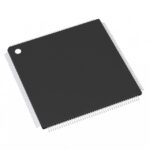 XC3S50A-5TQG144C

The activity of extra discounts on wholesale prices is in full swing…
Please fill in your contact information and we will send you the latest wholesale price list.



