 ChipApex | Global Electronic Components Supplier
SEARCH
Search Product
Search Post
— IC芯片 | 连接器 | 传感器 | 被动器件 —
Search productSearch post
— IC芯片 | 连接器 | 传感器 | 被动器件 —
Consult the customer manager about the wholesale price.
consultation hotline:86-132-6715-2157
email:[email protected]
Contact the product manager for consultation. One-stop consultation is available.
Do you want a lower wholesale price? Please send us your inquiry and we will reply immediately.
The XC6140N22A9R-G is a voltage monitoring integrated circuit designed for rechargeable battery applications, featuring constant voltage charging control. Manufactured by Torex Semiconductor, this supervisory circuit operates within a supply voltage range up to 6 V and includes a manual reset function with a fixed reset delay time of 224 us. It utilizes an open-drain output type and incorporates a backup switch for battery retention. The device is housed in an SSOT-24 surface-mount package and supports operation across a temperature range from -40 C to +105 C.
Verify the specific suffix 'N' indicates the open-drain output configuration distinct from CMOS variants. Confirm the threshold voltage corresponds to the '22' designation (2.2V) via the official datasheet. Ensure the SSOT-24 package matches the target PCB footprint. Cross-reference RoHS compliance status directly with the manufacturer's current documentation before finalizing procurement specifications.
Select this component when an open-drain output interface is required for battery monitoring rather than a push-pull CMOS output. The inclusion of a manual reset pin allows for system-level reset synchronization. Verify that the 2.2V threshold aligns with the specific battery cell discharge cutoff requirements. Ensure the operating temperature range meets the environmental conditions of the intended application.
This part belongs to the XC6140 series of voltage monitors from Torex Semiconductor. The series is characterized by its integration of battery charging control functions alongside standard voltage supervision. The 'N' variant specifically denotes the open-drain output structure, differentiating it from other series members with CMOS outputs while maintaining identical core monitoring and charging features.
Direct substitutes include XC6140C22A9R-G, though the output stage differs (CMOS vs. Open Drain). Other XC6140 series members with matching 2.2V thresholds may be considered if output drive requirements are flexible. Always verify pin compatibility and electrical characteristics against the original design constraints.
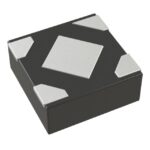 XC6140N22A9R-G
The activity of extra discounts on wholesale prices is in full swing…
Please fill in your contact information and we will send you the latest wholesale price list.




