 ChipApex | Global Electronic Components Supplier
SEARCH
Search Product
Search Post
— IC芯片 | 连接器 | 传感器 | 被动器件 —
Search productSearch post
— IC芯片 | 连接器 | 传感器 | 被动器件 —
Consult the customer manager about the wholesale price.
consultation hotline:86-132-6715-2157
email:[email protected]
Contact the product manager for consultation. One-stop consultation is available.
Do you want a lower wholesale price? Please send us your inquiry and we will reply immediately.
The XCM414B064D2-G is a special purpose regulator manufactured by Torex Semiconductor Ltd, designed for wireless device applications. It provides a fixed output voltage of 6.4V with a single output configuration. The component operates within an input voltage range of 2V to 26V and supports a positive output type. It utilizes a buck topology for DC-DC switching regulation. The device is housed in an 8-PowerXDFN package, specifically identified as USP-8B10, suitable for surface mount installation. It functions reliably across a wide ambient temperature range from -40°C to 85°C.
Verify the specific suffix D2-G against official Torex documentation to confirm the 6.4V output variant. Ensure compatibility with the 8-PowerXDFN (USP-8B10) footprint during PCB layout. Confirm RoHS3 compliance status if required by project specifications. Cross-reference the manufacturer part number with distributor listings to avoid confusion with other output voltage variants in the XCM414 series.
Select this component when a fixed 6.4V output is required for wireless power reception circuits. The integrated bridge diode feature simplifies design by reducing external component count. Consider the 8-PowerXDFN package size for space-constrained layouts. Verify that the 2V to 26V input range matches the source voltage requirements of the target application system.
This part belongs to the XCM414 series from Torex Semiconductor, which specializes in regulators with bridge diodes for wireless power receivers. The series includes various output voltage options distinguished by their ordering suffixes. The XCM414B064D2-G specifically denotes the 6.4V output version within this family, sharing common packaging and thermal characteristics with its counterparts.
Direct substitutes include other XCM414 series parts with different output voltages if the voltage requirement can be adjusted, such as XCM414B050D2-G for 5V or XCM414B062D2-G for 6.2V. Ensure the replacement maintains the same USP-8B10 package and bridge diode integration.
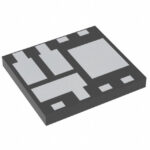 XCM414B064D2-G
The activity of extra discounts on wholesale prices is in full swing…
Please fill in your contact information and we will send you the latest wholesale price list.






