 ChipApex | Global Electronic Components Supplier
SEARCH
Search Product
Search Post
— IC芯片 | 连接器 | 传感器 | 被动器件 —
Search productSearch post
— IC芯片 | 连接器 | 传感器 | 被动器件 —
Consult the customer manager about the wholesale price.
consultation hotline:86-132-6715-2157
email:[email protected]
Contact the product manager for consultation. One-stop consultation is available.
Do you want a lower wholesale price? Please send us your inquiry and we will reply immediately.
The XCM414B094D2-G is a high-speed, low-power CMOS operational amplifier manufactured by Torex Semiconductor Ltd. This component features a rail-to-rail input and output capability, allowing it to operate effectively with single or dual power supplies. It is designed for applications requiring precise signal processing in portable devices. The device offers a gain bandwidth product of approximately 1 MHz and a slew rate suitable for general-purpose analog circuits. Its compact SOT-25 package facilitates integration into space-constrained designs while maintaining stable performance across varying temperature conditions.
Verify the exact suffix 'D2-G' against official Torex documentation to ensure correct tape-and-reel packaging and specific binning. Confirm RoHS compliance status directly with the manufacturer's latest datasheet revision. Ensure storage conditions adhere to moisture sensitivity levels specified for surface-mount devices. Cross-reference the date code to verify recent manufacturing batches if long-term reliability is critical for the application.
Select this component when rail-to-rail I/O is required alongside low power constraints. Compare gain bandwidth and slew rate against alternative op-amps if higher speed is needed. Consider the SOT-25 footprint compatibility during PCB layout. Evaluate thermal dissipation requirements based on the expected load current and ambient operating temperature range defined in the electrical characteristics table.
This part belongs to Torex's XCM series of operational amplifiers, which are optimized for low-voltage, low-power applications. The series typically includes various gain configurations and package options. The XCM414 variant specifically targets general-purpose analog signal processing tasks where size and efficiency are paramount. It complements other Torex linear ICs used in power management and signal chain applications.
Check for direct pin-compatible alternatives within the same family, such as other XCM414 variants with different suffixes. Verify that any substitute maintains the same rail-to-rail specifications and supply voltage range. Ensure the replacement part meets the same gain bandwidth and slew rate requirements for the specific circuit design.
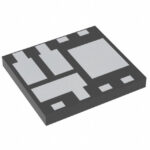 XCM414B094D2-G
The activity of extra discounts on wholesale prices is in full swing…
Please fill in your contact information and we will send you the latest wholesale price list.







