 ChipApex | Global Electronic Components Supplier
SEARCH
Search Product
Search Post
— IC芯片 | 连接器 | 传感器 | 被动器件 —
Search productSearch post
— IC芯片 | 连接器 | 传感器 | 被动器件 —
Consult the customer manager about the wholesale price.
consultation hotline:86-132-6715-2157
email:[email protected]
Contact the product manager for consultation. One-stop consultation is available.
Do you want a lower wholesale price? Please send us your inquiry and we will reply immediately.
The XCM414B116D2-G is a DC-DC switching regulator IC from the Torex Semiconductor XCM414 series, designed for wireless power receiver applications. It features a fixed output voltage of 11.6V and operates within an input voltage range of 2V to 26V. The device provides a single positive output and utilizes a buck topology. It is housed in an 8-PowerXDFN package with the supplier-specific designation USP-8B10. The component supports surface mount installation and functions across a temperature range of -40°C to 85°C.
Verify the specific output voltage configuration matches the target system requirements before integration. Confirm that the 8-PowerXDFN (USP-8B10) footprint aligns with the PCB layout design. Ensure thermal management strategies account for the specified operating temperature range during high-load conditions. Cross-reference the datasheet for precise pinout definitions and recommended external component values to guarantee stable operation.
Select this model when a fixed 11.6V output is required for wireless power reception. Consider the wide input range if the upstream rectifier voltage varies significantly. Evaluate the package size constraints against available board space. Compare against other XCM414 variants if different output voltages are needed for alternative charging standards or battery charging profiles.
This component belongs to the XCM414 series of voltage regulators manufactured by Torex Semiconductor. The series is characterized by its integration of bridge diodes, optimizing circuit complexity for wireless power applications. The XCM414B116D2-G represents a specific voltage variant within this family, distinguished by its 11.6V fixed output capability and standard industrial packaging options.
Other models within the XCM414 series, such as XCM414B033D2-G or XCM414B101D2-G, offer identical packaging and functional interfaces but provide different fixed output voltages. Substitution requires verifying that the alternative voltage level meets the load requirements without modifying the surrounding circuit topology.
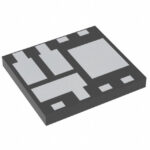 XCM414B116D2-G
The activity of extra discounts on wholesale prices is in full swing…
Please fill in your contact information and we will send you the latest wholesale price list.





