 ChipApex | Global Electronic Components Supplier
SEARCH
Search Product
Search Post
— IC芯片 | 连接器 | 传感器 | 被动器件 —
Search productSearch post
— IC芯片 | 连接器 | 传感器 | 被动器件 —
Consult the customer manager about the wholesale price.
consultation hotline:86-132-6715-2157
email:[email protected]
Contact the product manager for consultation. One-stop consultation is available.
Do you want a lower wholesale price? Please send us your inquiry and we will reply immediately.
The XCR3032XL-7VQ44C is a Complex Programmable Logic Device (CPLD) from the Xilinx XCR3000XL family, manufactured by AMD. It features an EEPROM-based non-volatile memory architecture and operates within a supply voltage range of 3.0 V to 3.6 V. The device contains 32 macrocells organized into two Logic Array Blocks (LABs), providing 750 system gates. It offers 36 I/O lines and supports System In-Programmability (SIP) via JTAG. The component is housed in a 44-pin Very Thin Quad Flat Package (VQFP-44) with lead-free termination.
Verify the specific speed grade suffix '7' against official AMD/Xilinx documentation to confirm the exact timing parameters, as datasheets may list ranges or different grades. Confirm RoHS compliance status and lead-free packaging details through authorized distributors. Check for End-of-Life (EOL) notifications or discontinuance notices, as older CPLD families may have limited availability or require long-lead-time procurement strategies.
Select this component when non-volatile storage is required to retain configuration data without battery backup. Compare the 32-macrocell capacity against design requirements; if more logic resources are needed, consider higher-density members of the XCR3000XL series such as the XCR3064 or XCR3096. Ensure the 44-pin VQFP package fits the PCB footprint constraints and that the 3.3 V I/O levels match the connected system interfaces.
The XCR3032XL belongs to the XCR3000XL family, which represents an evolution of the earlier XCR3000 series with improved performance and lower power consumption. This family utilizes CMOS EEPROM technology, distinguishing it from Flash-based CPLDs like the XC9500 series. AMD acquired Xilinx in 2022, and these products are now managed under AMD's Adaptive Computing division, though the core architecture remains consistent with the original Xilinx specifications.
Direct pin-to-pin replacements within the same family include the XCR3032XL-7VQ44C (same speed grade) or the XCR3032XL-10VQ44C (slower speed grade). For equivalent functionality with different packaging, verify compatibility with other 44-pin QFP variants. Cross-family migration to Flash-based CPLDs requires re-evaluation of programming methods and power management.
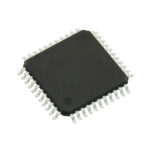 XCR3032XL-7VQ44C
The activity of extra discounts on wholesale prices is in full swing…
Please fill in your contact information and we will send you the latest wholesale price list.






