 ChipApex | Global Electronic Components Supplier
SEARCH
Search Product
Search Post
— IC芯片 | 连接器 | 传感器 | 被动器件 —
Search productSearch post
— IC芯片 | 连接器 | 传感器 | 被动器件 —
Consult the customer manager about the wholesale price.
consultation hotline:86-132-6715-2157
email:[email protected]
Contact the product manager for consultation. One-stop consultation is available.
Do you want a lower wholesale price? Please send us your inquiry and we will reply immediately.
The XCR3064XL-10VQ44I is a Complex Programmable Logic Device (CPLD) from the XCR3064XL family, manufactured by AMD/Xilinx. It features 64 macrocells and supports up to 36 I/O pins within a VQFP-44 surface-mount package. The device operates on a supply voltage ranging from 3.0 V to 3.6 V and utilizes EEPROM storage technology for non-volatile configuration. Key electrical specifications include a maximum operating frequency of 192 MHz and a typical propagation delay of 5.5 ns. Designed for industrial temperature ranges, it functions between 0°C and +70°C with a maximum operating current of 30 mA.
This component is identified as a discontinued product with an end-of-life status. Verification of availability should focus on surplus distributors or secondary market sources rather than direct manufacturer allocation. Buyers must confirm the specific suffix 'I' indicates the industrial temperature grade (0°C to +70°C) and ensure authenticity through authorized channels due to the obsolescence status.
Select this model when a low-pin-count CPLD with EEPROM-based non-volatility is required for cost-sensitive designs. The -10 speed grade offers a 5.5 ns delay suitable for moderate-speed logic applications. Ensure the design accommodates the 3.0 V to 3.6 V VCC requirement and verify that the VQFP-44 package dimensions fit the PCB footprint constraints compared to alternative pin-compatible packages.
The XCR3064XL-10VQ44I belongs to the XCR3000XL family, which succeeded the original XCR3000 series. This family introduced enhanced performance and lower power consumption while maintaining compatibility with older Xilinx design tools. The XL variant specifically optimized the architecture for higher density within small packages, making it a common choice for legacy system upgrades and compact embedded logic solutions.
Direct pin-to-pin replacements may be limited due to the discontinued status. Potential alternatives include other CPLDs from the same vendor with similar macrocell counts, such as the XC9500 series, though programming architectures differ. Cross-vendor equivalents from Lattice or Microchip should be evaluated based on I/O count, voltage compatibility, and package size rather than functional equivalence alone.
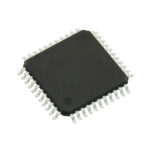 XCR3064XL-10VQ44I
The activity of extra discounts on wholesale prices is in full swing…
Please fill in your contact information and we will send you the latest wholesale price list.






