 ChipApex | Global Electronic Components Supplier
SEARCH
Search Product
Search Post
— IC芯片 | 连接器 | 传感器 | 被动器件 —
Search productSearch post
— IC芯片 | 连接器 | 传感器 | 被动器件 —
Consult the customer manager about the wholesale price.
consultation hotline:86-132-6715-2157
email:[email protected]
Contact the product manager for consultation. One-stop consultation is available.
Do you want a lower wholesale price? Please send us your inquiry and we will reply immediately.
The XCR3256XL-12FT256C is a CoolRunner XPLA3 Complex Programmable Logic Device (CPLD) manufactured by AMD. It features 256 macrocells, 16 logic blocks, and approximately 6000 usable gates. The device supports system-in-system programming with over 1,000 erase/program cycles. Key electrical parameters include a maximum propagation delay of 10.8 ns, an internal supply voltage range of 3V to 3.6V, and a maximum operating frequency of 92 MHz. It is housed in a 256-pin FineLine BGA package (17x17 mm) and operates within a commercial temperature range of 0°C to 70°C.
This component is officially designated as obsolete and no longer manufactured by AMD. Verification of availability should focus on surplus or aftermarket channels rather than direct manufacturer distribution. Buyers must confirm the authenticity of stock sources due to the end-of-life status. Replacement components from the same family or compatible alternatives should be evaluated for pin compatibility and functional equivalence before procurement.
When selecting this CPLD, ensure the design utilizes the 256-FTBGA (17x17 mm) footprint. Verify that the application requirements fit within the 256 macrocell limit and 164 I/O count. The 12 speed grade indicates a 10.8 ns delay; faster variants may require different suffixes if timing constraints are tighter. Confirm that the 3V to 3.6V VCCIO/VCCINT supply rails match the target system's power architecture.
The XCR3256XL belongs to the CoolRunner XPLA3 series, which succeeded the earlier CoolRunner II line. This series was designed to offer higher density and improved performance while maintaining low power consumption. The 'XL' suffix typically denotes extended temperature or specific process enhancements within the XPLA3 family, though standard commercial grades are common. It serves as a bridge between simple PLDs and larger FPGAs.
AMD lists XC2C256-7FTG256C as a similar alternative. Other potential replacements include Lattice LC4256V-75FTN256BC or Efinix T13F256C3, depending on specific feature requirements and ecosystem support.
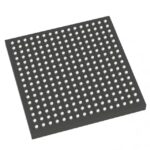 XCR3256XL-12FT256C
The activity of extra discounts on wholesale prices is in full swing…
Please fill in your contact information and we will send you the latest wholesale price list.





