 ChipApex | Global Electronic Components Supplier
SEARCH
Search Product
Search Post
— IC芯片 | 连接器 | 传感器 | 被动器件 —
Search productSearch post
— IC芯片 | 连接器 | 传感器 | 被动器件 —
Consult the customer manager about the wholesale price.
consultation hotline:86-132-6715-2157
email:[email protected]
Contact the product manager for consultation. One-stop consultation is available.
Do you want a lower wholesale price? Please send us your inquiry and we will reply immediately.
The XCR3384XL-10PQ208C is a Complex Programmable Logic Device (CPLD) belonging to the CoolRunner XPLA3 family. It features 384 macrocells and supports up to 172 I/O pins. The device operates within a temperature range of 0°C to 70°C and utilizes a 208-BFQFP surface mount package. Key electrical specifications include a maximum propagation delay of 9 nanoseconds and a supply voltage of 3.3V.
This component is officially classified as obsolete by the manufacturer and is no longer in active production. Sourcing requires careful verification of part authenticity and condition. Buyers should prioritize authorized distributors or certified secondary market suppliers to ensure reliability. Due to the end-of-life status, long-term availability cannot be guaranteed, making it suitable only for maintenance or non-critical replacement scenarios where lifecycle stability is not required.
Engineers selecting this part must account for its obsolete status when designing new products. The 208-pin BFQFP package requires specific PCB footprint considerations. While the 3.3V logic level is standard, the limited macrocell count may restrict complexity compared to newer FPGA alternatives. Designers should verify that the 9ns delay meets timing requirements for their specific clock frequencies before committing to this legacy component.
The XCR3384XL-10PQ208C is part of AMD's (formerly Xilinx) CoolRunner XPLA3 series, which was designed for mid-range CPLD applications. This family offered a balance of density and speed for general-purpose logic needs. As a legacy product, it represents an earlier generation of programmable logic technology, preceding more advanced high-density solutions currently available in the market.
Public confirmed substitute part numbers are not available in official documentation. The T13F256C3 is listed as a similar alternative but lacks verified functional equivalence data. Engineers should consult AMD's official obsolescence notices for recommended modern replacements or perform full electrical and pin-compatibility analysis before considering any cross-reference.
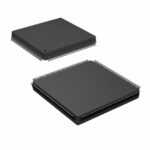 XCR3384XL-10PQ208C
The activity of extra discounts on wholesale prices is in full swing…
Please fill in your contact information and we will send you the latest wholesale price list.





