 ChipApex | Global Electronic Components Supplier
SEARCH
Search Product
Search Post
— IC芯片 | 连接器 | 传感器 | 被动器件 —
Search productSearch post
— IC芯片 | 连接器 | 传感器 | 被动器件 —
Consult the customer manager about the wholesale price.
consultation hotline:86-132-6715-2157
email:[email protected]
Contact the product manager for consultation. One-stop consultation is available.
Do you want a lower wholesale price? Please send us your inquiry and we will reply immediately.
The XCZU7EG-1FFVC1156I is a Zynq UltraScale+ MPSoC from the Enhanced Graphics (EG) family, manufactured by AMD. It integrates a quad-core ARM Cortex-A53 application processor running up to 1.2 GHz, dual-core ARM Cortex-R5F real-time processors, and an ARM Mali-400 MP2 GPU. The device features 16nm FinFET+ programmable logic with approximately 504,000 system logic cells. Key interfaces include PCIe Gen2, USB 3.0, SATA 3.1, DisplayPort 1.2a, and Gigabit Ethernet. It operates within a temperature range of -40°C to +100°C and utilizes an FCBGA-1156 package.
Verify the specific speed grade suffix '1' against design requirements, as it denotes a lower maximum clock frequency compared to higher-grade variants like '2'. Confirm availability through authorized AMD distributors, noting that standard lead times may extend significantly. Ensure compliance with RoHS directives and moisture sensitivity levels specified in the official datasheet before procurement.
Select this model when a balance of graphics capability and moderate FPGA resources is required. The '1' speed grade offers cost efficiency for applications not demanding the highest processor frequencies. Compare against the XCZU7EV series if video codec acceleration is needed instead of general-purpose GPU compute. Validate I/O voltage compatibility with LVCMOS, LVDS, and SSTL standards for target peripherals.
This component belongs to the Zynq UltraScale+ MPSoC EG series, designed for applications needing enhanced graphics alongside programmable logic. It sits between the CG (dual-core CPU) and EV (video codec) variants in terms of feature set. The part number indicates the 1156-pin FCBGA package and industrial temperature range, distinguishing it from commercial or larger package options.
Direct functional replacements within the same package and pinout are limited due to speed grade variations. The XCZU7EG-2FFVC1156I offers identical hardware but with higher processor clock speeds. For legacy migration, consider the Zynq-7000 series, though architectural differences require significant redesign. Verify pin compatibility and thermal performance when substituting.
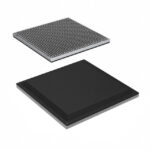 XCZU7EG-1FFVC1156I
The activity of extra discounts on wholesale prices is in full swing…
Please fill in your contact information and we will send you the latest wholesale price list.




