 ChipApex | Global Electronic Components Supplier
SEARCH
Search Product
Search Post
— IC芯片 | 连接器 | 传感器 | 被动器件 —
Search productSearch post
— IC芯片 | 连接器 | 传感器 | 被动器件 —
Consult the customer manager about the wholesale price.
consultation hotline:86-132-6715-2157
email:[email protected]
Contact the product manager for consultation. One-stop consultation is available.
Do you want a lower wholesale price? Please send us your inquiry and we will reply immediately.
The AMD XCZU7EG-2FBVB900I is a Zynq UltraScale+ MPSoC Enhanced Graphics (EG) device in the 900-FCBGA package. It integrates a quad-core ARM Cortex-A53 application processor, dual-core ARM Cortex-R5 real-time processor, and Mali-400 MP2 GPU with programmable logic containing over 504K logic cells. Key electrical parameters include a maximum A53 clock frequency of 1.5 GHz, R5 frequency of 600 MHz, and GPU frequency of 1.2 GHz. The device features 28,800 Adaptive Logic Modules (ALMs), 11 Mbit embedded memory, and 24 high-speed transceivers. It operates within a junction temperature range of -40°C to +100°C.
Verify the specific speed grade suffix '2' against project timing requirements, as it dictates the maximum operating frequencies for the processor cores and transceivers. Confirm that the industrial temperature rating (-40°C to +100°C) aligns with the environmental constraints of the target deployment. Ensure design compatibility with the 900-FCBGA footprint and associated thermal management solutions.
Select this model when enhanced graphics capabilities are required alongside high-end FPGA resources. The EG series distinguishes itself from EV models by including the Mali-400 MP2 GPU. Compare logic cell counts and transceiver speeds against alternative part numbers like the XCZU7EV or XCZU9EG to ensure the resource allocation matches the specific signal processing and I/O bandwidth demands of the system architecture.
This component belongs to the Zynq UltraScale+ MPSoC EG family, designed for applications demanding both high-level processing and flexible hardware acceleration. It utilizes 16nm FinFET+ technology to integrate Arm processors with ASIC-like performance on a single die. The device serves as a central processing unit for complex embedded systems, replacing multi-chip solutions with a unified platform for compute, control, and connectivity.
Direct functional replacements within the same package and feature set include the XCZU7EG-1FBVB900I and XCZU7EG-3FBVB900I. These variants share the same core architecture but differ in speed grades and logic density. Verify pinout compatibility and timing specifications before substituting.
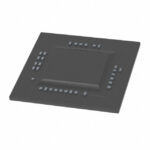 XCZU7EG-2FBVB900I
The activity of extra discounts on wholesale prices is in full swing…
Please fill in your contact information and we will send you the latest wholesale price list.




