 ChipApex | Global Electronic Components Supplier
SEARCH
Search Product
Search Post
— IC芯片 | 连接器 | 传感器 | 被动器件 —
Search productSearch post
— IC芯片 | 连接器 | 传感器 | 被动器件 —
Consult the customer manager about the wholesale price.
consultation hotline:86-132-6715-2157
email:[email protected]
Contact the product manager for consultation. One-stop consultation is available.
Do you want a lower wholesale price? Please send us your inquiry and we will reply immediately.
The AMD XCZU9CG-1FFVC900E is a System on Chip (SoC) FPGA from the Zynq UltraScale+ MPSOC family, manufactured using 16nm FinFET+ technology. It integrates programmable logic with processing systems featuring quad ARM Cortex-A53 and dual ARM Cortex-R5 cores. The device provides approximately 599K logic cells, 32.1 Mbit of embedded memory, and supports high-speed data transmission via 24 transceivers. Operating at frequencies up to 1.5 GHz for the processing system and 600 MHz for the FPGA fabric, it is housed in a 900-ball FCBGA package suitable for surface mount applications.
Verify the specific speed grade suffix '1' against project requirements, as it denotes a lower maximum frequency compared to higher grades like '2'. Confirm RoHS compliance status through official manufacturer documentation prior to integration. Ensure ESD protection protocols are followed during handling due to the moisture sensitivity level indicated in standard datasheets.
Select this component when a balance of moderate logic capacity and powerful application processing is required. Compare the 599K logic cell count against design complexity needs. Evaluate the 24 transceiver count against bandwidth requirements. Consider the 900-pin BGA footprint for PCB layout constraints and thermal management capabilities within the 0°C to 100°C operating range.
This part belongs to the Zynq UltraScale+ MPSOC EG series, targeting cost-sensitive embedded applications. It shares the same silicon die and core architecture as other XCZU9CG variants but differs in speed grading and temperature specifications. It serves as an alternative to larger or smaller logic density parts within the Zynq portfolio depending on resource utilization.
Direct pin-to-pin replacements include other speed grades of the XCZU9CG family, such as XCZU9CG-2FFVC900E, provided timing constraints are met. For different logic densities, consider XCZU7CG or XCZU11EG models, though these require schematic and layout modifications due to varying pin counts and power requirements.
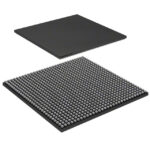 XCZU9CG-1FFVC900E
The activity of extra discounts on wholesale prices is in full swing…
Please fill in your contact information and we will send you the latest wholesale price list.




