 ChipApex | Global Electronic Components Supplier
SEARCH
Search Product
Search Post
— IC芯片 | 连接器 | 传感器 | 被动器件 —
Search productSearch post
— IC芯片 | 连接器 | 传感器 | 被动器件 —
Consult the customer manager about the wholesale price.
consultation hotline:86-132-6715-2157
email:[email protected]
Contact the product manager for consultation. One-stop consultation is available.
Do you want a lower wholesale price? Please send us your inquiry and we will reply immediately.
The MtronPTI XO5081-013R is a surface-mount oven-controlled crystal oscillator (OCXO) housed in a standard 1x1 inch (25.4x25.4mm) package. It operates on a 5.0V supply and utilizes an AT-cut crystal resonator to deliver a sine wave output signal. The device is engineered for high-frequency stability, supporting a nominal frequency of 100 MHz with a tuning range of ±4 ppm. Designed for compact RF applications, it offers superior thermal stability compared to standard TCXOs while maintaining a significantly smaller footprint than traditional through-hole OCXOs.
Verify the specific ordering suffix against the manufacturer's official documentation to confirm the exact output waveform and cut type. Ensure that the required supply voltage matches the 5.0V specification. Confirm that the 1x1 inch package dimensions align with the available board space. Check for any specific configuration requirements regarding pin assignments before finalizing the bill of materials.
Select this component when a stable frequency reference is required but physical space limits the use of larger through-hole oscillators. The 5.0V supply requirement must be compatible with the system power architecture. Consider the sine wave output compatibility with subsequent mixer or amplifier stages. Evaluate the thermal environment to ensure the oven control mechanism functions within the operational temperature range.
This model belongs to the XO508x series of surface-mount OCXOs from MtronPTI. The series provides a balance between high stability and reduced form factor. The XO5081 variant specifically denotes the AT-cut configuration with sine wave output options. This family targets applications requiring robust frequency stability without the bulk of legacy packaging styles.
Direct replacements are limited due to the specific 1x1 inch SMT OCXO niche. Verify if other manufacturers offer equivalent 1x1 inch packages with matching 5.0V operation. Cross-reference pinouts carefully as pin numbering may differ between suppliers. Ensure phase noise and aging specifications meet or exceed the original design requirements.
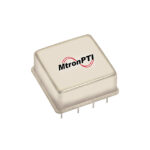 XO5081-013R
The activity of extra discounts on wholesale prices is in full swing…
Please fill in your contact information and we will send you the latest wholesale price list.





