 ChipApex | Global Electronic Components Supplier
SEARCH
Search Product
Search Post
— IC芯片 | 连接器 | 传感器 | 被动器件 —
Search productSearch post
— IC芯片 | 连接器 | 传感器 | 被动器件 —
Consult the customer manager about the wholesale price.
consultation hotline:86-132-6715-2157
email:[email protected]
Contact the product manager for consultation. One-stop consultation is available.
Do you want a lower wholesale price? Please send us your inquiry and we will reply immediately.
The XPC823ZT66B2T is a mobile computing microprocessor based on the MPC823 architecture. It integrates an embedded PowerPC core with a specialized communication processor module for imaging and serial tasks. The device operates at 66 MHz within a commercial temperature range of 0°C to 95°C. It utilizes a 256-lead Plastic Ball Grid Array (PBGA) package measuring 23x23 mm with a 1.27 mm pitch. Key internal resources include 1K data cache, 2K instruction cache, and 8K dual-port RAM.
Verify that the specific ordering suffix matches the required package dimensions and thermal specifications. Confirm the operating temperature range aligns with system requirements. Ensure compatibility with existing development tools and software environments designed for the PowerPC architecture before finalizing procurement decisions.
Select this component when a design requires integrated image processing alongside standard communication protocols without external DSPs. The dual-access memory facilitates efficient data sharing between the main core and the communication module. Evaluate the available serial channels against interface requirements to ensure sufficient connectivity for the target application.
This part belongs to the MPC823 family of mobile computing microprocessors. It represents a cost-effective entry point into the embedded PowerPC ecosystem. The device is engineered to handle complex graphical user interfaces and real-time operating systems while maintaining low power consumption suitable for battery-operated devices.
XPC823ZT75B provides equivalent functionality at a higher clock frequency of 75 MHz. XPC823CZT66B offers the same performance but supports an extended industrial temperature range from -40°C to 95°C. Verify pinout and register compatibility when transitioning between these variants.
It offloads peripheral tasks like imaging and communication from the main PowerPC core, allowing parallel execution and reducing overall power consumption.
The memory controller supports glueless interfaces to DRAM, SRAM, EPROM, Flash EPROM, SDRAM, and EDO memory across eight configurable banks.
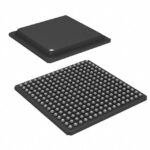 XPC823ZT66B2T
The activity of extra discounts on wholesale prices is in full swing…
Please fill in your contact information and we will send you the latest wholesale price list.






