 ChipApex | Global Electronic Components Supplier
SEARCH
Search Product
Search Post
— IC芯片 | 连接器 | 传感器 | 被动器件 —
Search productSearch post
— IC芯片 | 连接器 | 传感器 | 被动器件 —
Consult the customer manager about the wholesale price.
consultation hotline:86-132-6715-2157
email:[email protected]
Contact the product manager for consultation. One-stop consultation is available.
Do you want a lower wholesale price? Please send us your inquiry and we will reply immediately.
The XR16V564IV is a quad Universal Asynchronous Receiver/Transmitter (UART) integrated circuit manufactured by Sipex. It features four independent UART channels, each equipped with a 32-byte FIFO buffer to enhance data throughput and reduce CPU intervention. The device supports high-speed serial communication with data rates up to 2 Mbps. It operates within a standard CMOS voltage range and is housed in a 64-lead Plastic Quad Flat Package (PQFP-64). This component is designed for applications requiring multiple serial ports in a compact form factor.
Verify the manufacturer source carefully, as Sipex assets were acquired by Exar and subsequently MaxLinear. Ensure the part number matches the specific package type (PQFP-64) and speed grade. Check for lead-free status if required by environmental regulations. Confirm availability from authorized distributors or surplus suppliers, noting that original Sipex branding may vary depending on the supply chain history.
Select this component when four separate UART interfaces are needed in a single package. The 32-byte FIFO depth is suitable for moderate data rates up to 2 Mbps. Consider the PQFP-64 package size constraints. If higher speeds or more channels are required, evaluate alternative devices from the same family or newer generations. Ensure voltage levels match the system logic requirements.
The XR16V564 series belongs to the family of high-performance UART controllers. The 'IV' suffix typically denotes the industrial temperature range and the PQFP-64 package variant. This part is part of a lineage of serial interface solutions originally developed by Sipex Corporation, which has undergone corporate acquisitions affecting brand naming and distribution channels.
Direct replacements include other quad UARTs with similar FIFO depths and pinouts. Cross-reference with Exar or MaxLinear part numbers such as the EXAR16V564 series. Verify electrical compatibility and package dimensions before substitution. Generic UART ICs may require additional external components if they lack integrated FIFOs.
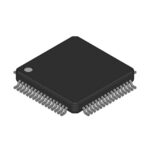 XR16V564IV
The activity of extra discounts on wholesale prices is in full swing…
Please fill in your contact information and we will send you the latest wholesale price list.





