 ChipApex | Global Electronic Components Supplier
SEARCH
Search Product
Search Post
— IC芯片 | 连接器 | 传感器 | 被动器件 —
Search productSearch post
— IC芯片 | 连接器 | 传感器 | 被动器件 —
Consult the customer manager about the wholesale price.
consultation hotline:86-132-6715-2157
email:[email protected]
Contact the product manager for consultation. One-stop consultation is available.
Do you want a lower wholesale price? Please send us your inquiry and we will reply immediately.
The XRT75VL00DIVTR-F is a single-channel Line Interface Unit (LIU) with an integrated SONET desynchronizer designed for E3, DS3, and STS-1 applications. It incorporates independent receiver, transmitter, and jitter attenuator sections within a 52-pin TQFP package. The device operates on a single 3.3 V ± 5% power supply with 5 V tolerant I/O and supports industrial temperatures from -40°C to +85°C. It features a crystal-less jitter attenuator selectable in transmit or receive paths, B3ZS/HDB3 encoding/decoding, and PRBS generation/detection capabilities.
Verify the specific suffix 'IVTR' against official documentation to confirm tape-and-reel packaging and temperature range. Confirm that the component is sourced directly from MaxLinear or authorized distributors to ensure authenticity. Check for recent product change notices regarding pinout or electrical characteristics updates.
Select this component for designs requiring a fully integrated LIU solution with SONET de-synchronization. Ensure the application requires a single-channel interface supporting E3, DS3, or STS-1 rates. Verify that the system can accommodate a 52-pin TQFP footprint and operates within the specified 3.3V voltage domain.
This part belongs to the XRT75L series of telecom interface ICs manufactured by MaxLinear (formerly Exar). It serves as a specialized line interface unit for high-speed digital transmission networks, bridging terminal equipment to the physical line while managing signal integrity through built-in jitter attenuation.
Publicly confirmed substitute part numbers are not available in the provided source material. Consult manufacturer obsolescence notices for potential end-of-life status or recommended upgrades within the same product family.
Yes, the on-chip advanced crystal-less jitter attenuator can be disabled if required by the specific application design.
The XRT75VL00DIVTR-F includes an on-chip B3ZS/HDB3 encoder and decoder that can be either enabled or disabled depending on the mode of operation.
Configuration and control are supported via a 5-wire Serial Microprocessor Interface (Host Mode) or through direct Hardware Mode settings.
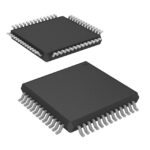 XRT75VL00DIVTR-F
The activity of extra discounts on wholesale prices is in full swing…
Please fill in your contact information and we will send you the latest wholesale price list.






