 ChipApex | Global Electronic Components Supplier
SEARCH
Search Product
Search Post
— IC芯片 | 连接器 | 传感器 | 被动器件 —
Search productSearch post
— IC芯片 | 连接器 | 传感器 | 被动器件 —
Consult the customer manager about the wholesale price.
consultation hotline:86-132-6715-2157
email:[email protected]
Contact the product manager for consultation. One-stop consultation is available.
Do you want a lower wholesale price? Please send us your inquiry and we will reply immediately.
The YAT-12A+ is a fixed-value, absorptive MMIC attenuator from Mini-Circuits, fabricated using an IPD process. It provides 12.8 dB nominal attenuation with a wideband frequency range of DC to 18 GHz. The device operates at a 50-ohm impedance and supports a maximum power handling of 1.1 Watts. Key electrical specifications include a maximum VSWR of 1.9. It is housed in a compact MCLP-6 (6-VDFN) surface-mount package with an exposed pad, suitable for automated assembly.
Verify the specific datasheet revision and RoHS compliance status directly with Mini-Circuits or authorized distributors before procurement. Confirm that the MCLP-6 package footprint matches your PCB layout requirements. Ensure thermal management strategies account for the 1.1W power rating and exposed pad soldering requirements to maintain reliability within the -40°C to +85°C operating temperature range.
Select the YAT-12A+ when a broadband solution covering DC to 18 GHz is required with minimal reflection due to its absorptive nature. Compare against other YAT series variants if different attenuation values are needed. Ensure the 50-ohm system impedance aligns with your application. Consider the 6-VDFN package size constraints during mechanical design to ensure adequate clearance and thermal dissipation paths on the substrate.
The YAT-12A+ belongs to the YAT-A series of fixed attenuators from Mini-Circuits. This family offers various nominal attenuation values ranging from 0 dB to higher levels, all sharing similar wideband characteristics and surface-mount packaging. These components are designed for applications demanding reliable, low-profile RF attenuation without the variability associated with reflective types.
Direct substitutes within the same series include other YAT models with different attenuation values (e.g., YAT-3A+, YAT-6A+) if the specific 12.8 dB value is not critical. For identical specifications, verify availability of current production runs versus obsolete stock. No direct cross-manufacturer equivalents are confirmed in public documentation; alternative designs may require custom matching networks.
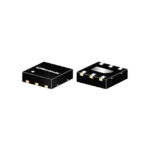 YAT-12A+
The activity of extra discounts on wholesale prices is in full swing…
Please fill in your contact information and we will send you the latest wholesale price list.





