 ChipApex | Global Electronic Components Supplier
SEARCH
Search Product
Search Post
— IC芯片 | 连接器 | 传感器 | 被动器件 —
Search productSearch post
— IC芯片 | 连接器 | 传感器 | 被动器件 —
Consult the customer manager about the wholesale price.
consultation hotline:86-132-6715-2157
email:[email protected]
Contact the product manager for consultation. One-stop consultation is available.
Do you want a lower wholesale price? Please send us your inquiry and we will reply immediately.
The Z0410MF0AA2 is a 4 A Triac from STMicroelectronics, housed in a compact through-hole IPAK package. This four-quadrant device is designed for home appliances, power tools, and industrial systems, capable of driving loads up to 4 A. It features a maximum repetitive peak off-state voltage (VDRM/VRRM) of 600 V and a maximum repetitive peak reverse voltage (VDSM/VRSM) of 750 V. The component operates with a maximum junction temperature of 125 °C and utilizes a gate trigger current (IGT) of 25 mA. It complies with ECOPACK2 standards, ensuring halogen-free molding and lead-free plating.
Verify the specific suffix MF0AA2 against official STMicroelectronics documentation to confirm exact binning or testing variations. Ensure the IPAK package dimensions match the target PCB footprint requirements. Confirm that the 25 mA gate trigger current aligns with the driving circuit capabilities for reliable switching at the intended operating temperatures.
Select this component when a 4 A load capacity is required within a through-hole IPAK form factor. The 600 V rating suits standard mains voltage applications, while the 750 V variant offers higher surge tolerance. Consider the 125 °C junction temperature limit for thermal management design. Verify compatibility with the 25 mA gate drive signal level to ensure proper turn-on characteristics across the full operating range.
The Z0410MF0AA2 belongs to the Z0410MH series of four-quadrant Triacs. This series is engineered for general-purpose AC power switching in consumer and industrial environments. The IPAK package provides a balance between current handling capability and board space efficiency compared to larger TO packages, making it suitable for dense assembly layouts in appliances and tools.
Cross-reference with other 4 A, 600 V four-quadrant Triacs in IPAK packages. Verify matching gate trigger current specifications and thermal resistance values. Ensure alternative components support the same 750 V reverse voltage rating if surge protection is critical.
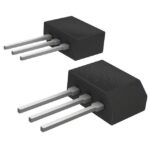 Z0410MF0AA2
The activity of extra discounts on wholesale prices is in full swing…
Please fill in your contact information and we will send you the latest wholesale price list.





