 ChipApex | Global Electronic Components Supplier
SEARCH
Search Product
Search Post
— IC芯片 | 连接器 | 传感器 | 被动器件 —
Search productSearch post
— IC芯片 | 连接器 | 传感器 | 被动器件 —
Consult the customer manager about the wholesale price.
consultation hotline:86-132-6715-2157
email:[email protected]
Contact the product manager for consultation. One-stop consultation is available.
Do you want a lower wholesale price? Please send us your inquiry and we will reply immediately.
The Z16C3010VEC00TR is a CMOS Universal Serial Controller (USC) manufactured by Zilog. It features two independent full-duplex channels supporting data rates up to 10 Mbps. Each channel includes dual baud rate generators, a digital phase-locked loop for clock recovery, and 32-byte FIFOs for both receiver and transmitter operations. The device supports multi-protocol communication including asynchronous, synchronous byte-oriented, and bit-oriented formats. It utilizes a flexible bus interface compatible with 8-bit or 16-bit systems, directly supporting 680X0 and 8086 families. Electrical specifications include a supply voltage range of 4.5V to 5.5V and a typical operating current of 7mA.
Verify component authenticity through authorized distributors as the part may be subject to obsolescence notices. Confirm package type and temperature grade match design requirements. Check for RoHS compliance status if environmental regulations apply to the final assembly. Ensure proper handling procedures are followed due to moisture sensitivity classification.
Select this controller when dual-channel serial communication with independent protocol handling is required. Verify that the target system bus supports the necessary timing parameters for 110 ns cycle times. Consider the available package options based on board space constraints. Evaluate whether the integrated FIFOs and DMA capabilities meet throughput requirements without excessive CPU intervention.
This component belongs to the Z16C30 family of Universal Serial Controllers. It serves as a peripheral interface for microprocessors, converting between parallel processor data and serial transmission streams. The device integrates complex serial logic functions previously requiring multiple discrete chips, simplifying system design for applications demanding robust serial connectivity.
Consult official documentation for cross-reference information. Verify pin compatibility and electrical characteristics before substituting with other USC models. Ensure that any alternative device supports the same multi-protocol configurations and bus interface requirements.
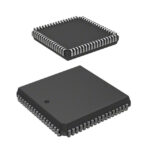 Z16C3010VEC00TR
The activity of extra discounts on wholesale prices is in full swing…
Please fill in your contact information and we will send you the latest wholesale price list.





